
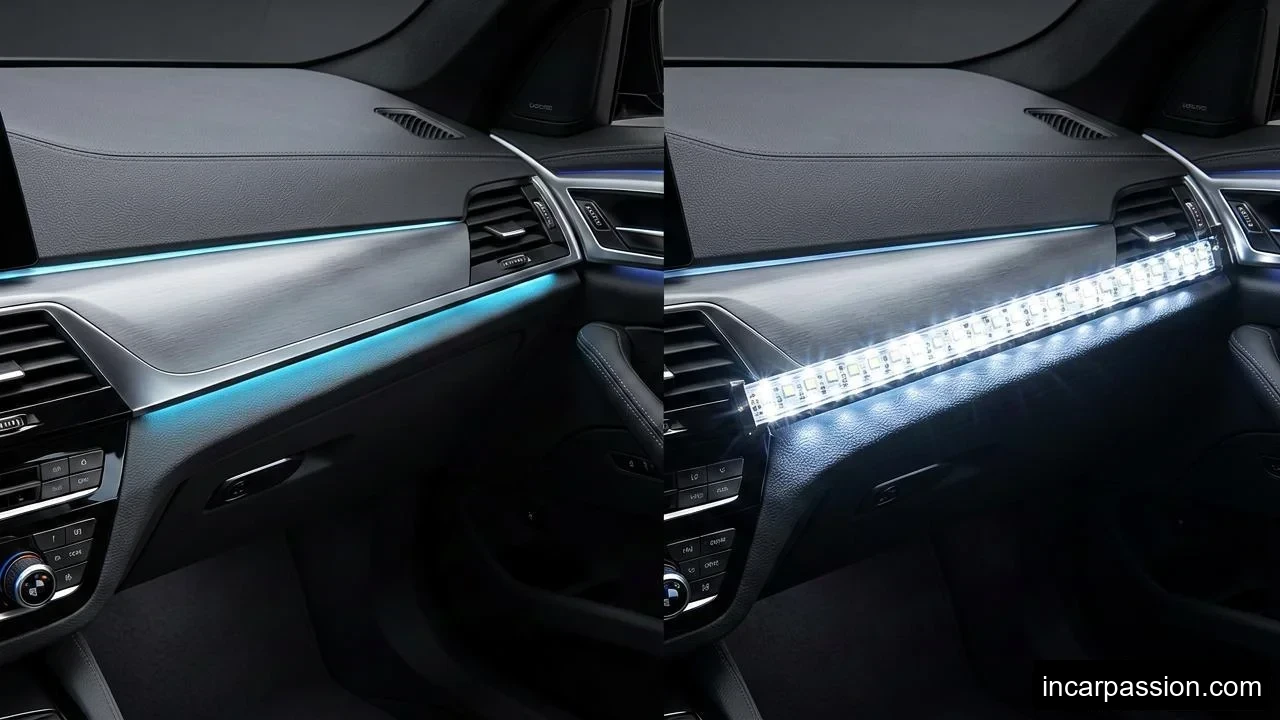

Enhancing BMW 3 Series Atmosphere: The Best Door and Footwell Lighting Solutions
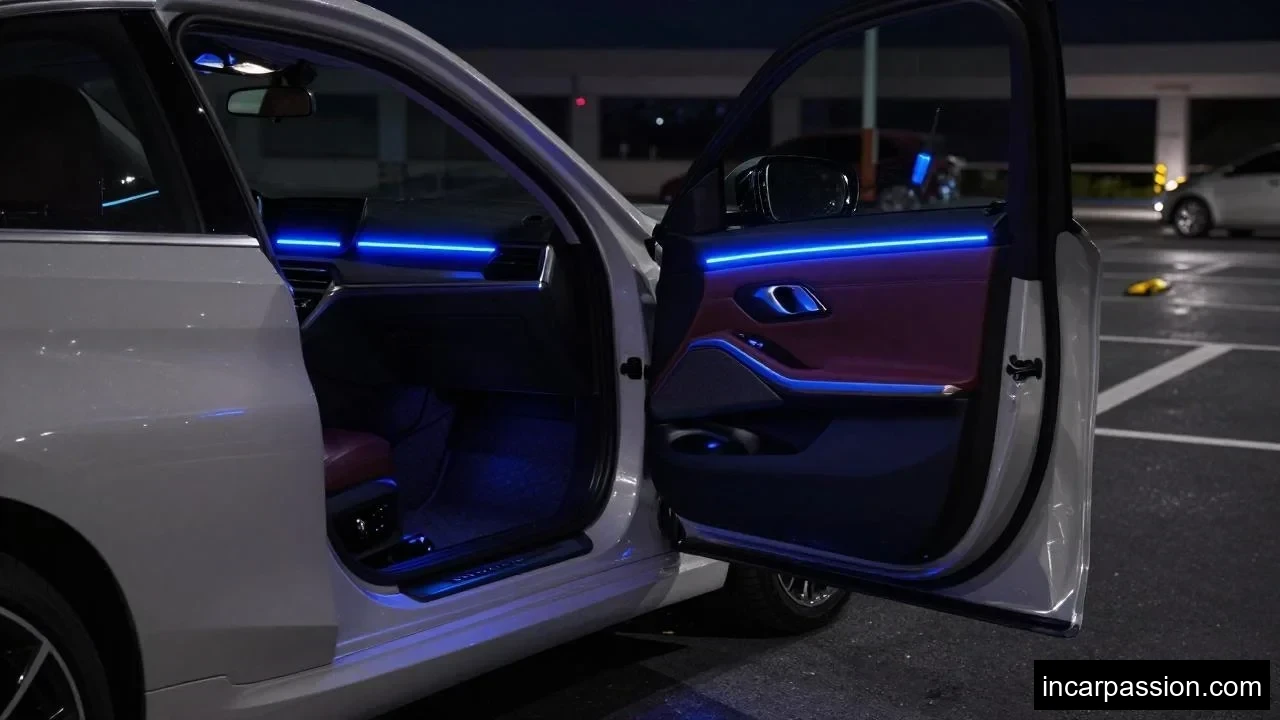
If you own a 3 Series, you already know BMW gets a lot right from the factory: clean dashboard lines, a driver-focused layout, and just enough ambient lighting to make the cabin feel premium. But from what we’ve seen at the factory, the door and footwell areas are usually where owners notice the gap between “nice” and “actually finished.”
That’s where a smart BMW 3 Series atmosphere light upgrade can really change things.
We’ve built ambient lighting kits for G20, G28, F30, and long-wheelbase variants for buyers across Europe, the Middle East, and Southeast Asia. The pattern is pretty consistent. Owners usually aren’t saying the whole cabin is too dark. They’re talking about uneven brightness, weak door accent lines, and footwell lighting that more or less disappears unless the interior is extremely dark.
If you want your BMW interior to feel closer to a higher trim—or more in line with a current M Performance-style look—this guide will help you pick the right setup without spending money on the wrong kit.
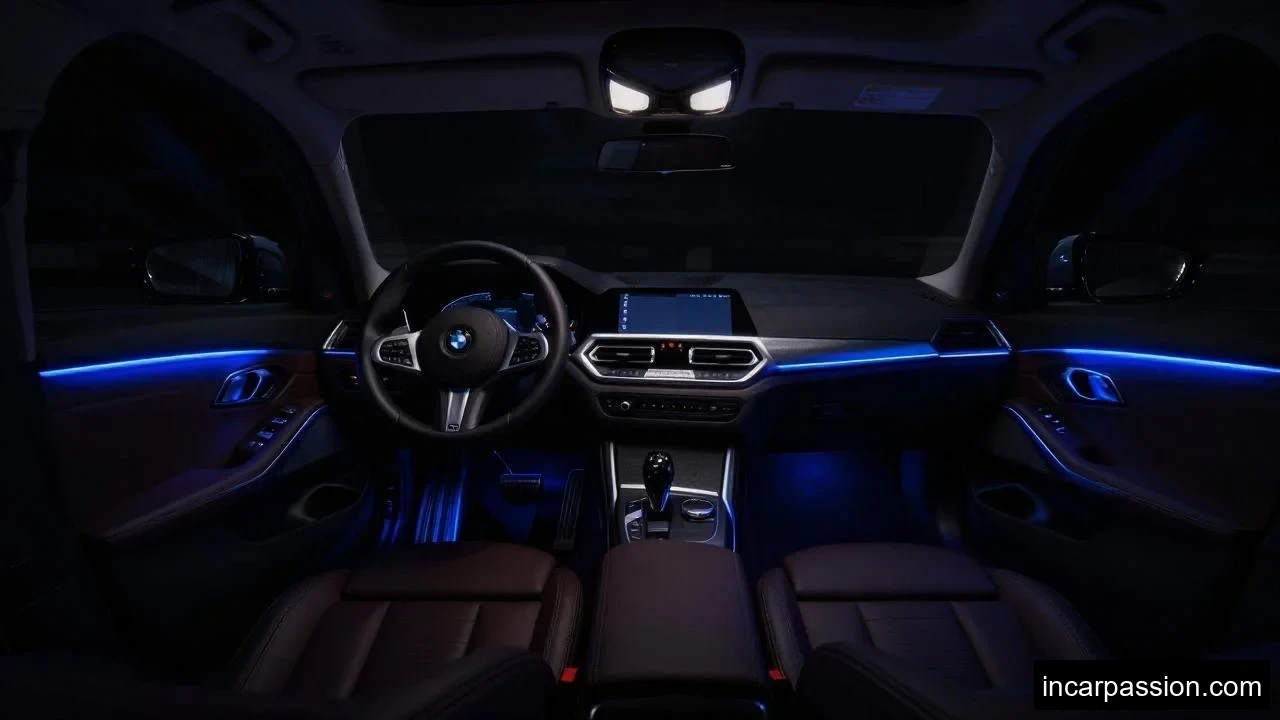
Why door and footwell lights matter more than most owners expect
Here’s the first thing we tell customers: if your budget is tight, do door + footwell first, not dashboard first.
Why?
Because these are the two spots your eyes notice right away when you open the door and get in:
– Door lighting frames the width and shape of the cabin
– Footwell lighting adds depth and makes the interior feel more complete
– Together, they make even a standard black interior feel less flat
– They’re visible to both front and rear passengers
– They shape both first entry impression and night driving ambience
In our testing on BMW 3 Series cabins, a door strip running at 4,500-6,000 mcd/m visible output with a matched footwell module at 0.8-1.5W per position gives the best balance. Below that, the door line tends to look weak. Above that, the footwell can get distracting on dark roads.
And that balance matters. A lot of aftermarket kits chase pure brightness, but ambient light should be visible, not something you keep staring at.
Which BMW 3 Series models are easiest to upgrade?
Not every 3 Series interior is equally easy to work with.
From our experience:
– G20/G28 (2019+): easiest for premium-looking expansion, especially for multi-zone RGB door trim and footwells
– F30/F35 (2012-2019): still very upgradeable, but trim structure and harness access vary more by year and market
– Base trims without factory ambient package: usually need more wiring work or standalone controller solutions
– Cars with factory ambient lighting: easiest to expand cleanly if voltage and communication are matched correctly
If you’re buying online, always confirm:
1. exact model code
2. production year
3. left-hand drive or right-hand drive
4. with or without factory ambient light
5. whether you want plug-and-play or retrofit-level customization
A surprising number of returns happen because people order a generic “BMW 3 Series kit” without checking the actual trim architecture.
The three common lighting solutions on the market
When buyers ask us for the best BMW 3 Series atmosphere light setup, we usually sort the market into three levels.
1. Basic add-on LED strips
These are usually universal flexible strips, often 3 mm to 8 mm wide, with adhesive backing.
They’re cheap, typically:
– $18-$45 retail for a basic set
– $2.80-$6.50 per strip ex-factory at MOQ 100-300 sets
Good for:
– budget upgrades
– DIY users
– temporary styling
Weak points:
– visible hotspots
– adhesive failure in summer
– poor fit in BMW door panel gaps
– often no OEM-style dimming integration
2. Dedicated BMW-specific light guide kits
These use model-matched trim pieces, acrylic or PC light guides, and vehicle-specific connectors.
Typical pricing:
– $120-$280 retail
– $38-$95 ex-factory depending on material, controller, and channel count
– common factory MOQ: 30-100 sets per model
Good for:
– cleaner installation
– more even light diffusion
– better fit around door cards and handle trims
– closer-to-OEM appearance
Weak points:
– quality varies a lot
– low-cost versions use brittle PMMA or thin wire
– some kits promise “original protocol sync” but are really just using independent app control
3. Full multi-zone ambient retrofit kits
These combine:
– front and rear door lights
– footwells
– dashboard trim
– center console accents
– sometimes speaker rings and storage box lights
Typical pricing:
– $280-$680 retail
– $95-$240 ex-factory
– common MOQ: 10-50 kits for resellers
Good for:
– full-cabin transformation
– synchronized color changes
– stronger premium effect
– better resale appeal than random universal strips
Weak points:
– more installation labor
– more risk of trim damage if done carelessly
– poor kits may introduce CAN noise, flicker, or mismatched brightness
Door lighting: what separates a good kit from a disappointing one
This is where a lot of BMW owners get fooled by product photos.
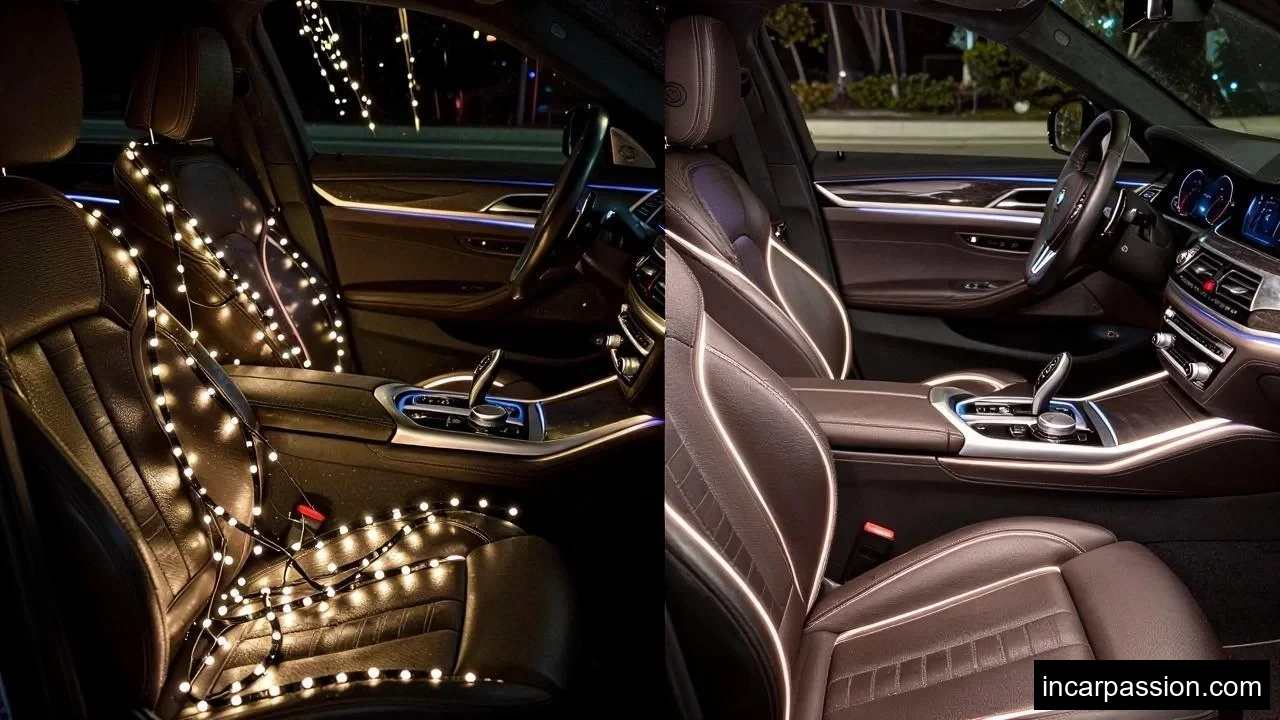
An image can look fantastic. In a real car, though, door ambient lighting lives or dies based on five engineering details:
1. Light guide material
We prefer:
– optical-grade PMMA for very clear edge transmission, or
– diffused PC where impact resistance matters more
For BMW door trim, many factories use 1.5 mm to 3.0 mm light guides. Too thin, and the line looks weak. Too thick, and it can sit proud of the panel and scream aftermarket.
2. LED density
A good door strip should use roughly:
– 60-120 LEDs/m for standard ambient use
– 144 LEDs/m if the guide path is long or highly curved
Below 60 LEDs/m, hotspots usually show up unless the diffusion is exceptionally good.
3. Wiring gauge
For stable low-voltage door lighting, we generally use:
– 24 AWG for short runs
– 22 AWG if the run includes multiple modules or longer routing
Ultra-cheap kits often use very thin wire that’s easy to hide, but the voltage drop starts to show up as color inconsistency—especially on white, ice blue, or purple.
4. Connector design
Door panels get removed, repaired, and reinstalled. Connectors need to survive that.
A proper kit should have:
– locking connectors
– anti-reverse design
– insulation sleeves
– enough service length, usually 80-120 mm extra slack
5. Mounting method
We’ve seen more failures from bad mounting than from dead LEDs.
Common methods:
– 3M-type adhesive
– clip-in trim channel
– embedded slot-fit structure
For BMW doors, embedded or clip-assisted structures tend to be more reliable than adhesive-only strips, especially in climates above 35°C cabin soak temperature.
> Common Mistake
> Buying a “super bright” door light kit without checking diffusion. In our returns data, the most common complaint isn’t “too dim.” It’s “looks dotted and cheap.” A smooth light line usually beats a brighter strip with visible LED points.
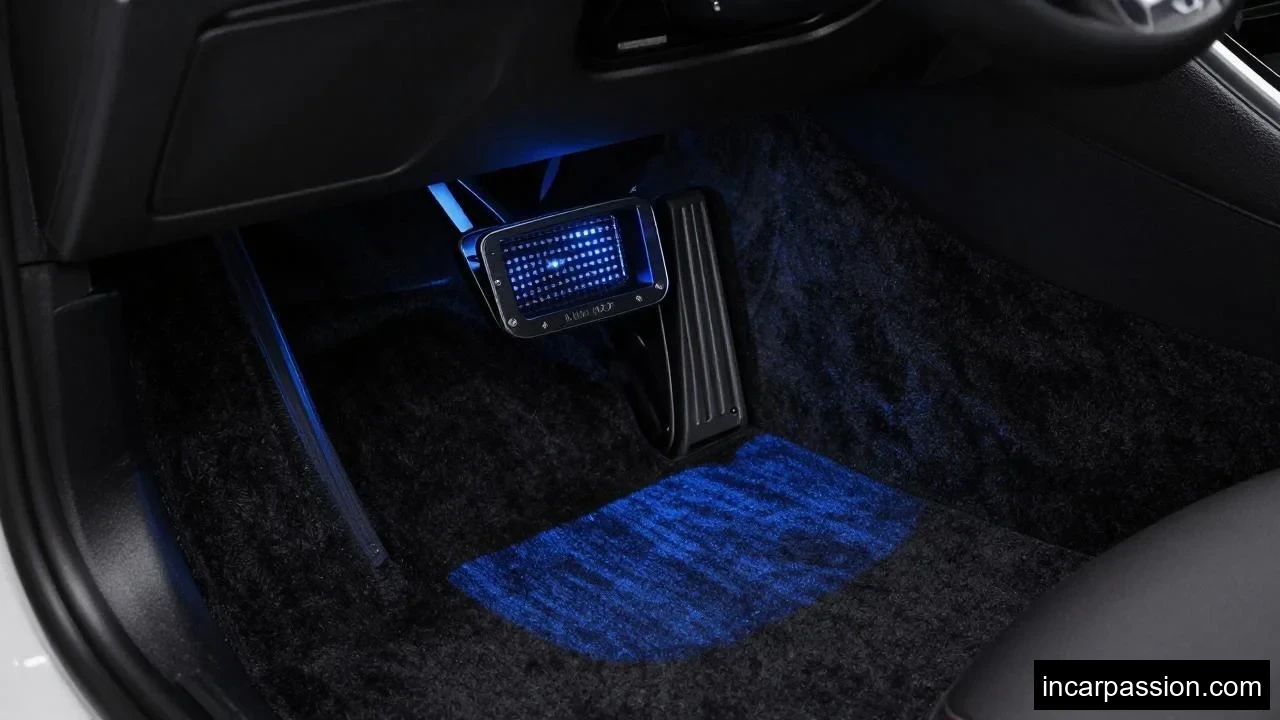
Footwell lighting: small area, huge impact
If door lighting creates style, footwell lighting creates atmosphere.
And in the BMW 3 Series, footwells are one of the highest-value upgrades because the hardware is simple but the visual payoff is big.
A solid footwell kit should cover these basics:
– 0.8W to 1.5W per lamp position
– beam angle around 90° to 120°
– stable dimming at low brightness
– color match with the door lights
– no visible flicker under phone camera at 240 fps slow motion
That last one matters more than people think. Cheap PWM controllers often flicker at low dim levels. You may not catch it with your eyes, but anyone filming interior clips definitely will.
Front vs rear footwell difference
A common budget move is front-only footwell lighting. It works—but visually, it leaves the cabin a bit unfinished.
Our recommendation:
– Front only if budget is under $80
– Front + rear if budget is $120+
– If doing rear, keep rear output at about 70-85% of front brightness
That ratio feels premium. Equal brightness front and rear can make the lower cabin look overlit.
Best solution by owner type
Different buyers need different setups. Here’s the simplest comparison.
| Solution Type | Best For | Typical Retail Price | Main Trade-Off |
|---|---|---|---|
| Universal LED strip kit | DIY budget owners | $18-$45 | Fit and diffusion are usually weaker |
| BMW-specific door + footwell kit | Most 3 Series owners | $120-$280 | Quality depends heavily on supplier |
| Full multi-zone retrofit | Enthusiasts wanting OEM-plus look | $280-$680 | More labor and higher install risk |
| Factory-style replacement modules | Owners who want minimal visual modification | $90-$220 | Less dramatic than full trim lighting |
What we look for in a good BMW 3 Series atmosphere light kit
When we evaluate samples in our workshop, we don’t start with the app or the remote. We start with build quality.
Here are the checkpoints we actually use:
Light uniformity
At 30 cm viewing distance in a dark cabin, hotspots should be minimal. If individual LED nodes are obvious, the door line will never look OEM.
Color consistency
RGB kits often look great in blue and not-so-great in white. True neutral white is hard to get on low-cost RGB systems. If white or warm white matters to you, ask whether the kit uses:
– RGB only
– RGBW
– dual-color + RGB mix
In our experience, RGBW is the better option for BMW owners who actually use white lighting modes.
Heat performance
A door light should not deform the guide or weaken adhesive after repeated heat cycles. We test samples after:
– 8 hours at 65°C
– then cool-down to room temperature
– then power-on retest
This exposes weak glue and poor plastic stability pretty quickly.
Controller quality
A decent controller should support:
– smooth dimming
– memory of last color mode
– overcurrent protection
– startup without flash or random color
Cheap controllers often do a full-color flash on unlock. Some owners enjoy that. Most don’t.
Harness length and routing
For a BMW 3 Series sedan, practical harness lengths usually need:
– 1.2-1.8 m front runs
– 1.8-2.5 m rear door runs
– extra length for B-pillar routing
Short harnesses are one of the most annoying hidden issues in low-cost kits.
> Engineering Note
> If a kit claims direct compatibility with factory ambient control, ask which signal method it uses. On BMW applications, “compatible” can mean anything from true vehicle-linked control to simple power-triggered synchronization. Those are not the same product, and they should not cost the same.
For readers comparing broader [car ambient light](/) options or a full [car lighting upgrade](/), BMW-specific fitment is usually worth paying for if you care about panel alignment and factory-style brightness.
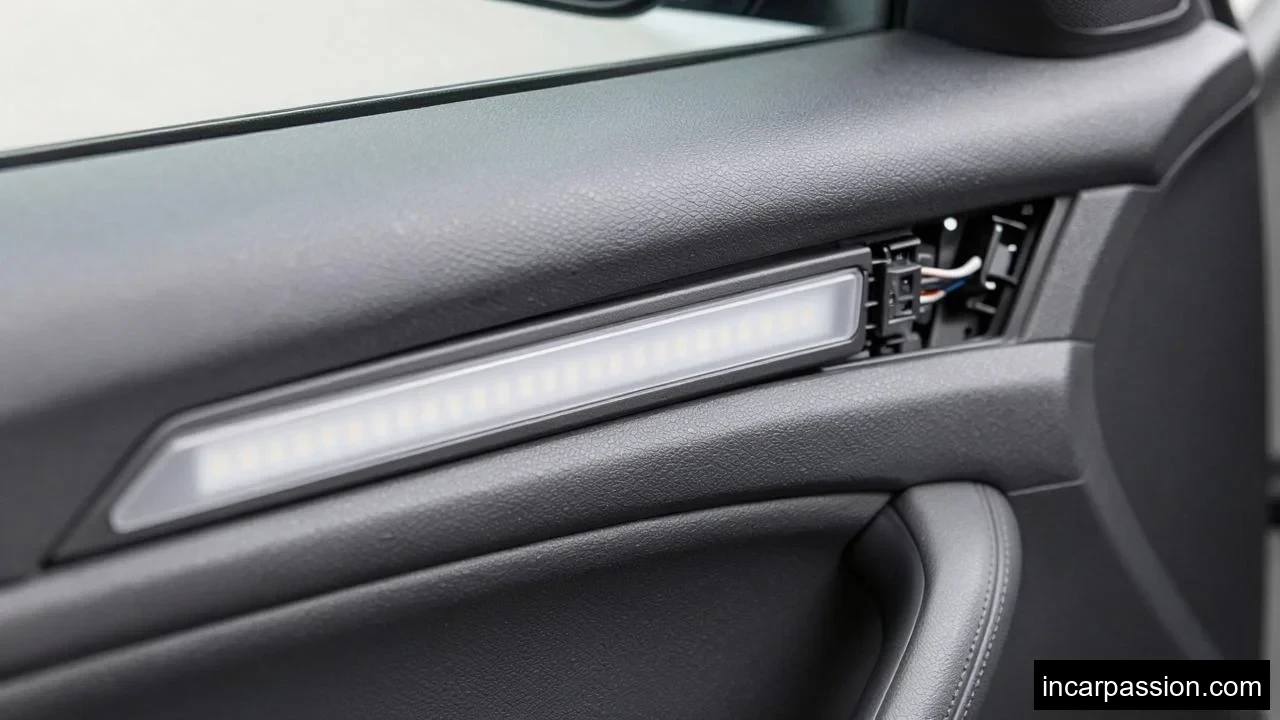
Installation reality: DIY vs professional fitting
Let’s be honest: plenty of BMW 3 Series owners *can* install these kits themselves, but not every kit is a good weekend experiment.
DIY works best when:
– the kit is true plug-and-play
– no cutting of original trim is required
– you already have trim tools
– you’re comfortable removing door cards
– you can route wires without pinching them
Professional installation is better when:
– trim needs slotting or drilling
– the kit integrates with factory ambient channels
– rear doors require more complex routing
– you want zero rattles and zero loose clips afterward
Typical install labor in many markets:
– Door + footwell basic kit: 2.5-4.0 hours
– Full ambient retrofit: 5-9 hours
– labor pricing often $80-$350, depending on country and shop level
The biggest installation risks are:
1. breaking trim clips
2. scratching gloss black panels
3. wire pinch at the window path
4. poor grounding
5. mismatched left-right routing causing visible brightness difference
> Pro Tip
> Before fully reassembling the doors, power the system at 20%, 60%, and 100% brightness and compare left vs right from the driver seat. Small differences are much easier to fix before the trim goes back on.
OEM-style look vs “show car” look
This is where taste comes in.
Most BMW 3 Series owners tell us they want “OEM style,” but when we show them samples, they usually mean one of two very different things:
OEM-style look
– softer brightness
– clean door line
– matched footwell wash
– no rainbow animation during daily use
– common colors: amber, ice blue, white, lilac
Show car look
– stronger saturation
– animated modes
– more zones lit at once
– speaker rings, console edges, storage bins
– often app-controlled
Neither is wrong. But yes, the hardware choice changes.
For OEM-style, we recommend:
– lower-output but higher-diffusion guides
– RGBW or dedicated white + color system
– dimmer default settings
– stable memory mode
For show car style, we recommend:
– higher channel count
– stronger controller
– grouped scene programming
– reinforced wiring for multiple zones
If you’re also browsing [interior car lights](/), [car mood lighting](/), or [automotive interior lights](/), keep in mind that universal “RGB interior kits” often look flashy in photos but don’t sit as cleanly in BMW 3 Series door architecture.
Choosing colors that actually suit the BMW cabin
Here’s a practical point a lot of style guides skip: BMW interior materials change how colors look.
Black Dakota-style interiors absorb more light, so blue and violet appear deeper. Oyster and beige interiors reflect more, so the same LED output can look 20-30% brighter.
In our customer feedback, the most-used colors are:
– Ice blue: modern, clean, close to BMW digital feel
– Amber: closest to classic BMW nighttime mood
– White: premium if the system supports clean white
– Purple/lilac: popular for social media clips
– Red: sporty, but easy to overdo in the footwell
If your cabin is mostly black:
– use medium output
– consider blue, white, or purple
If your cabin is beige or oyster:
– reduce brightness by 15-25%
– avoid oversaturated red in the footwell
– warm white or amber usually looks more upscale
Product-level comparison: what matters most
Below is the practical comparison most owners actually need.
| Feature | Budget Kit | Mid-Range BMW-Specific Kit | Premium Multi-Zone Kit |
|---|---|---|---|
| Door light diffusion | Visible hotspots common | Usually smooth | Smoothest, best trim fit |
| Footwell brightness control | Basic 2-5 step dimming | Better low-level dimming | Fine-tuned scene control |
| Integration | Standalone power/controller | Partial vehicle sync possible | Best chance of OEM-like behavior |
| Expected lifespan | 6-18 months typical low-cost market range | 2-4 years with decent components | 3-5 years if properly installed |
Materials and specs that are worth paying for
We get asked this a lot: “What’s actually worth spending extra on?”
Honestly, not everything deserves the premium. But these things usually do.
Worth paying more for
– Optical-grade light guides
– Better connectors
– Controller with low-flicker dimming
– Vehicle-specific harness
– RGBW instead of cheap RGB if white light matters
Not always worth paying more for
– oversized app feature lists
– dozens of animation modes
– music sync gimmicks
– remote controls if the app is stable
– “German chip” claims without part number proof
A good door and footwell package for a BMW 3 Series doesn’t need 200 functions. It needs:
– even light
– stable brightness
– good fit
– no rattles
– no peeling after summer
That’s what owners actually live with every day.
Buying advice for B2C enthusiasts
If you’re shopping as an end user, here’s the checklist we’d use ourselves.
Ask the seller these 8 questions
1. Is the kit for G20/G28 or F30/F35 exactly?
2. Is it RGB, RGBW, or single color?
3. Are the door trim parts model-specific or universal?
4. What is the controller frequency for dimming?
5. Is the footwell light included for front only or front + rear?
6. Does the kit use plug-in connectors or require splicing?
7. What is the warranty period—6 months, 12 months, or longer?
8. Can the seller provide night photos of the actual installed product, not renderings?
If a seller can’t answer at least 6 of those clearly, that usually tells you what you need to know.
Typical B2C budget ranges
– $30-$60: only basic universal strips, low OEM feel
– $120-$220: sweet spot for decent BMW-specific door + footwell kit
– $250-$450: strong enthusiast-level package with more zones and better control
– $500+: full visual transformation, but installation quality becomes critical
For enthusiasts who also compare broader [car led strip light](/) or [automotive led lighting](/) categories, remember that BMW fitment matters more than raw lumen claims.
For buyers considering custom or bulk orders
Even though this article is for enthusiasts, quite a few readers end up organizing group buys or helping local installers source kits. If that’s you, factory terms matter.
Typical OEM/ODM numbers in our industry:
– MOQ for packaging customization: often 100-300 sets
– MOQ for logo controller/app label changes: often 200-500 sets
– New mold or trim adaptation: can start around $800-$3,500, depending on part size and complexity
– Sampling lead time: 7-15 days
– Mass production lead time: 20-35 days
If you’re comparing bulk programs, look beyond ex-factory price. Ask about:
– failure rate target
– spare connector ratio
– carton drop protection
– color bin consistency
– after-sales replacement policy
That matters more than saving $4 per set.
For official fitment and owner-manual context, it’s worth checking BMW’s own resources through the BMW USA owner support pages. For broader lighting legality questions, we also suggest reviewing NHTSA vehicle equipment guidance. If you want to compare factory trim and package positioning, the BMW 3 Series model information is useful.
Real-world problems we see after installation
This section alone can save a lot of disappointment.
1. One door is dimmer than the others
Usually caused by:
– voltage drop
– loose connector
– damaged crimp
– different strip batch/color bin
2. Footwell color does not match the door
Usually caused by:
– RGB-only controller trying to simulate white
– different LED package source
– mismatched diffusion cover
3. Light line looks broken at bends
Usually caused by:
– poor guide material
– too sharp radius
– LED source placed badly at the entry point
4. Adhesive fails in hot weather
Usually caused by:
– low-grade tape
– oily panel surface
– no primer used
– strip mounted under tension
5. Car develops rattles after install
Usually caused by:
– unsecured harness
– missing foam tape
– broken clip reused
– connector hitting inner panel
In our factory support cases, the product is only part of the story. Installation quality accounts for a huge share of complaints.
FAQ: BMW 3 Series door and footwell ambient lighting
Is BMW 3 Series atmosphere light worth upgrading?
Yes, if your goal is cabin feel rather than raw functionality. Door and footwell lighting are some of the most visible upgrades in the 3 Series interior, and a good kit in the $120-$280 range can make the cabin look much more complete at night.
Which is better for a BMW 3 Series: door lights or footwell lights?
If you can only choose one, we usually say door lights first for style impact. If you want the most balanced result, do door + front footwell together. That combination gives the strongest improvement per dollar.
Can I install BMW 3 Series atmosphere light kits myself?
Yes, many owners can—especially with plug-and-play kits. But if trim cutting, rear-door wiring, or factory integration is involved, professional installation is safer. Labor usually runs 2.5-9 hours depending on kit complexity.
Do aftermarket ambient light kits drain the battery?
A properly designed kit should have very low standby draw, typically under 5-15 mA depending on controller design. Poor-quality controllers can draw more. If the seller can’t provide standby current data, we’d be cautious.
What color looks best in a BMW 3 Series?
The most popular choices are ice blue, amber, white, and purple. Black interiors handle brighter cool tones well. Beige or oyster interiors usually look better with slightly dimmed amber or warm white.
Will aftermarket kits look OEM?
Some will, some won’t. The key factors are fitment, diffusion, trim integration, and brightness tuning. A BMW-specific light guide kit with smooth diffusion usually looks much more OEM than adhesive universal strips.
How long do these kits usually last?
Low-cost kits may last 6-18 months. Better BMW-specific kits often last 2-4 years, while premium kits with proper installation can reach 3-5 years. Heat, controller quality, and installation quality all affect lifespan.
Is RGB or RGBW better for a BMW 3 Series?
If you care about white light looking clean, RGBW is better. Cheap RGB kits often make white look slightly blue, pink, or green depending on the LED mix and dimming level.
Our final recommendation
If you want the best-value BMW 3 Series atmosphere light upgrade, we wouldn’t start with the biggest kit. We’d start with the most balanced one:
– BMW-specific door light guides
– front + rear footwell modules
– RGBW controller if budget allows
– plug-and-play harness where possible
– professional install if trim modification is required
For most owners, the sweet spot is $120-$280 retail for a decent door + footwell package, plus installation if needed. That gets you the biggest visual improvement without turning the interior into a wiring project.
If your goal is a cleaner, richer cabin at night, door and footwell lighting are still the best first step. From what we’ve seen, they create more noticeable atmosphere than a lot of bigger, more expensive interior mods.
If you’re comparing options for personal use, local resale, or a group buy, start with fitment accuracy and diffusion quality—not marketing photos. That’s what separates a kit you enjoy for years from one you pull out after one summer.
If you want to explore more [vehicle ambient light](/), [car interior led](/), or bulk-ready [car light accessories](/), we’d stick with model-specific solutions and ask for real installed photos before buying.
References & Sources
1. BMW USA Owners
2. BMW 3 Series Sedan Overview
3. NHTSA Vehicle Safety

 Audi
Audi BMW
BMW Mercedes Benz
 BYD
BYD Cadillac
 Chery
Chery Ford
Ford Geely/ZEEKR
 Honda
Honda Hyundai Kia
 Jaguar
 Jetour
 Lamborghini
 Land Rover
 Lexus
Lexus Li Auto
 Mazda
Mazda Nissan
 Porsche
 Tesla
Tesla Toyota
 Volkswagen
 Volvo
Volvo