
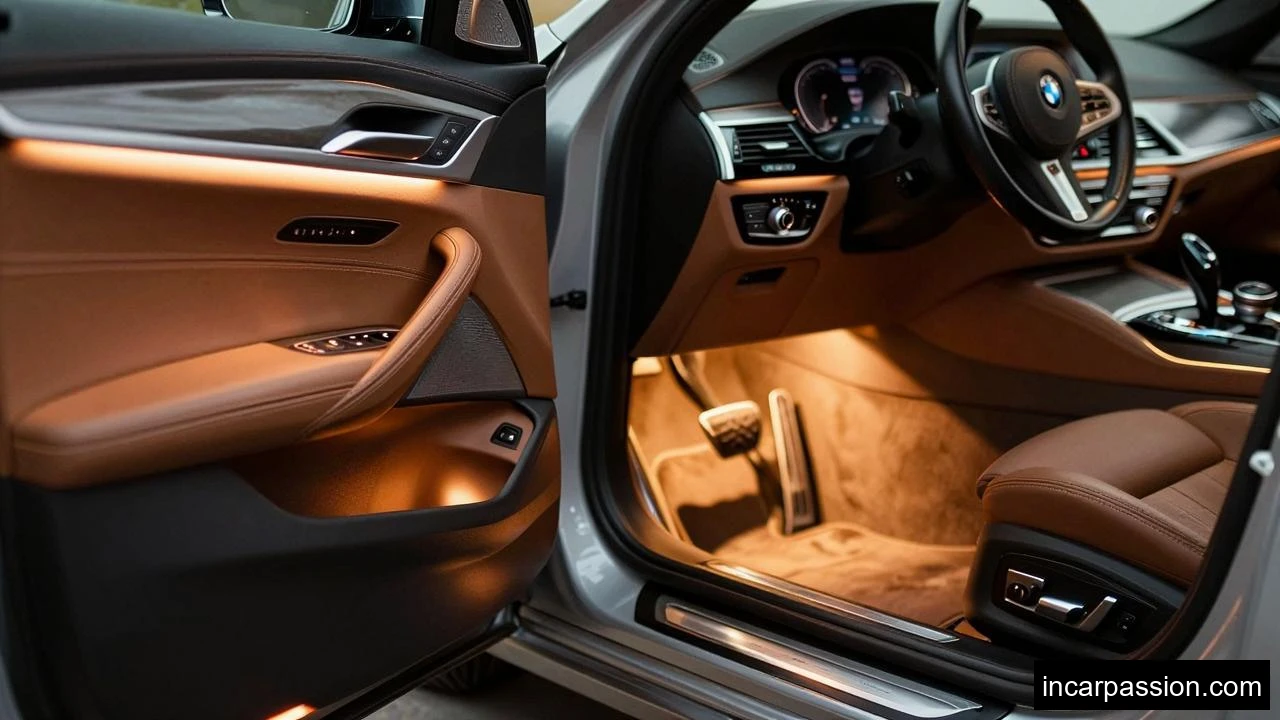

BMW 5 Series Ambient Lighting: Picking the Right Door and Footwell Lights
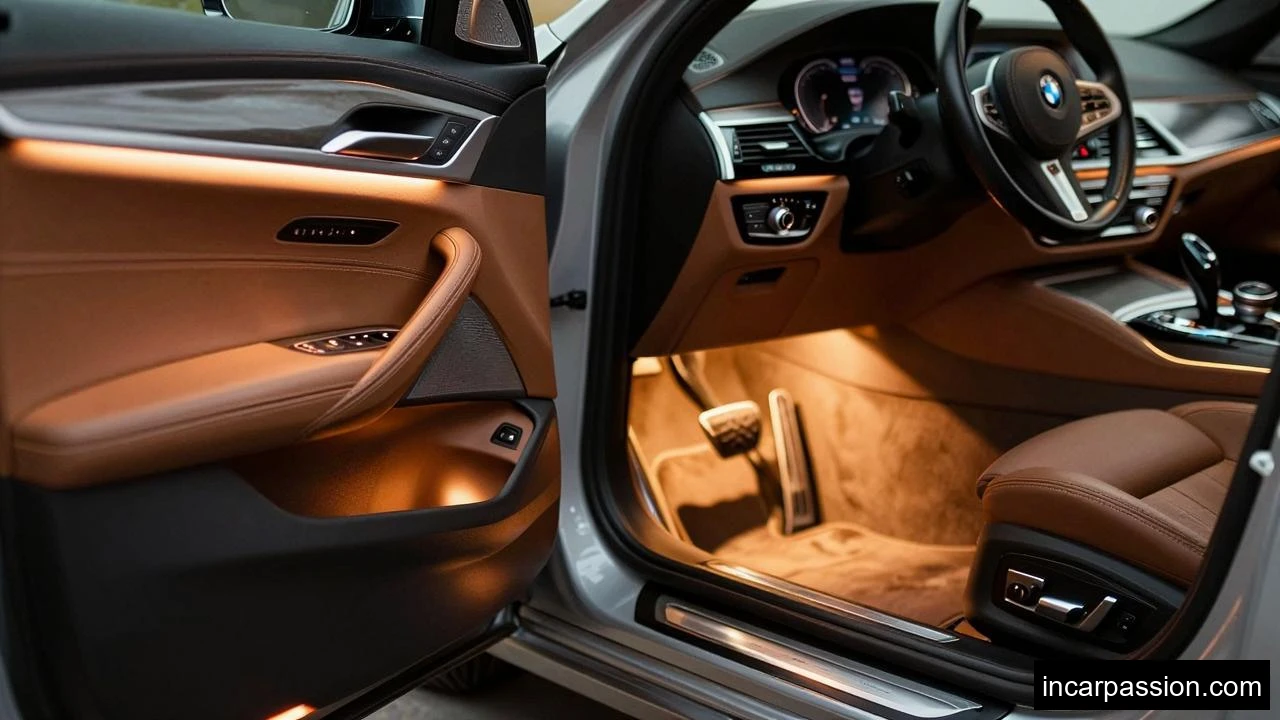
So you’re building a BMW-focused interior accessories line. On the surface, BMW 5 Series ambient lights look straightforward: grab a door trim light, a footwell module, a controller, done. But in our factory experience, that’s exactly where B2B programs trip up.
A BMW 5 Series project usually fails for one of five reasons:
1. door light brightness doesn’t match footwell brightness
2. color rendering looks different between trim and floor area
3. harness length is wrong for one wheelbase or one production year
4. the kit installs fine on the bench but rattles after 3 months in the car
5. the importer picks the cheapest PCB and then gets stuck with 2%–5% field returns
If you’re a brand founder, that matters more than a pretty catalog photo.
We’ve built ambient light kits for multiple German-platform interiors. The practical question isn’t “do buyers want ambient lighting?” (They do.) The real question is: which door and footwell configuration gives you the best margin, lowest complaint rate, and widest fitment coverage?
This guide compares the main options with factory-level specifics: materials, dimensions, cost ranges, MOQ, installation risk, and what actually causes claims after shipment.
Why door and footwell lights drive most of the value
Inside a BMW 5 Series cabin, customers notice three zones first:
– the upper and mid door trim light line
– the door pocket/accent area
– the driver and passenger footwell
From a visual standpoint, these zones do most of the heavy lifting. In our testing, adding only dashboard light without matching the door and footwell usually feels incomplete. But when door and footwell are balanced right, even a 4-piece or 6-piece kit can look premium.
For B2B buyers, that means you don’t always need the most complicated 18-in-1 package. Sometimes a well-engineered door + footwell kit gives a better sell-through rate than a larger but less stable package.
Hook: If your buyers complain that “the photos look premium but the cabin feels cheap in person,” the problem is often not the LED chip. It’s the distribution of light across the door and floor.
We see this especially in BMW 5 Series programs where buyers ask for “OEM style” but try to hit entry-level retail pricing under USD 95. That can be done, but only if you define the product clearly.
For background on broad product categories, our pages on [car ambient light](/), [auto ambient lighting](/), and [automotive interior lights](/) show how these kits fit into the wider interior upgrade market.
BMW 5 Series door lights: where quality differences show first
Door ambient lights do more than illuminate. They’re the part the user touches, sees at eye level, and compares directly with OEM trim.
In production, the main door-light structures we see for BMW 5 Series are:
– light guide strip + LED injection point
– diffuser lens module with short PCB
– direct LED strip with frosted cover
For premium aftermarket BMW fitment, the first two are usually better. Direct LED strips are cheaper, but the “dot” effect is harder to hide unless the diffuser wall is thick enough—usually 1.2-1.8 mm with a good haze finish.
What we recommend for door zones
For a stable door system, our baseline is:
– PMMA or optical-grade PC light guide
– 2835 or 3014 RGB LED package
– 1.0 oz copper PCB
– operating voltage 12V DC
– harness length 450-750 mm depending on door position
– clip retention pull force above 6 kg
– color tolerance within about 10%-15% brightness difference between left and right doors
If you want a more OEM-style appearance, the light guide edge finish matters a lot. A poor polish can cause bright spots near the LED injection point and weak output at the far end.
In our factory, a front-door trim light bar for BMW applications often runs 520-780 mm in visible length, while rear doors are often 380-620 mm, depending on generation and trim design. This directly affects LED count, current draw, and controller sizing.
Footwell lights: small part, high complaint risk
Footwell lights look simple, but they create a large share of after-sales complaints. Why? Because they sit low, heat up in enclosed spaces, get kicked, and are judged on immediate brightness.
Typical problems we’ve seen:
– lens yellowing on low-grade PC after 6-12 months
– hot spots because the diffuser depth is too shallow
– loose connectors after installer pulls the harness too hard
– mismatch between left/right footwell color due to LED bin variation
– CANBUS-related flicker when integrating with some vehicles
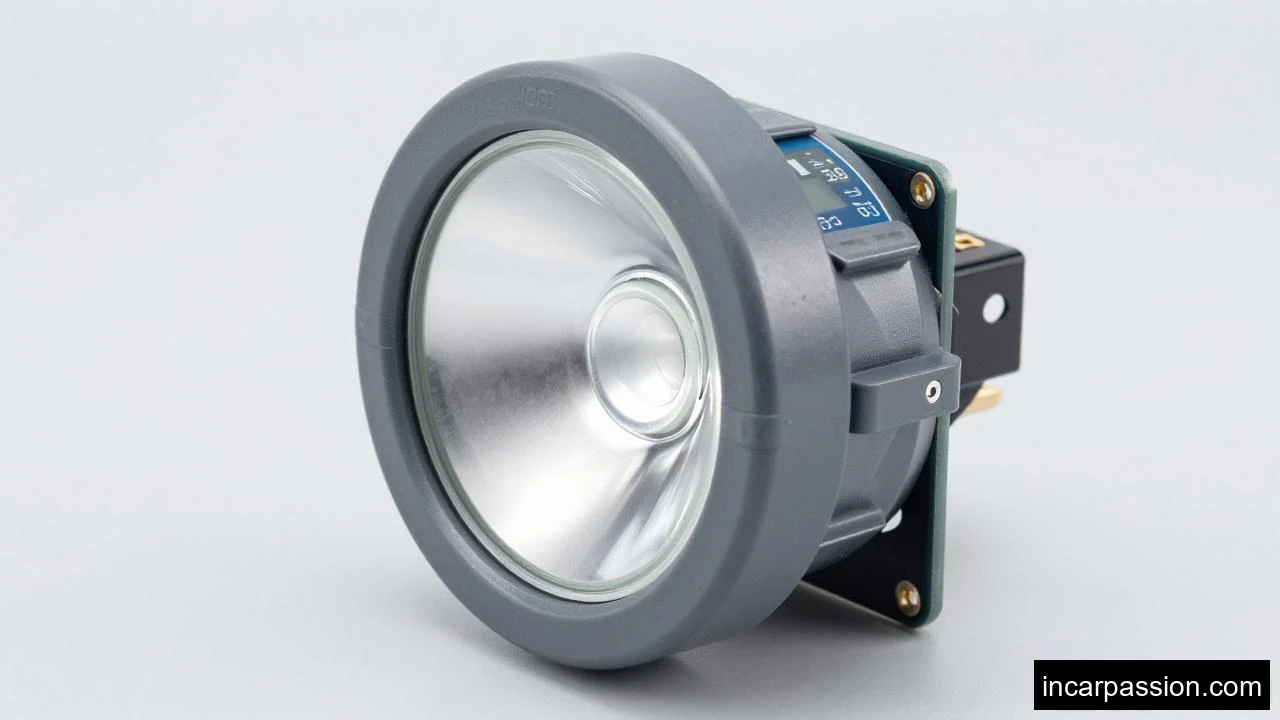
A footwell module should not be treated as an afterthought. For BMW 5 Series ambient lights, a good footwell unit usually uses:
– housing size around 42 x 24 x 18 mm to 58 x 30 x 22 mm
– ABS or PC/ABS housing
– frosted diffuser lens with 0.8-1.5 mm wall thickness
– 2 to 6 LEDs depending on target output
– 150-350 lumen practical output range for aftermarket ambient style
– connector insertion life of at least 30 cycles
Hook: If your return rate is above 2%, inspect the footwell connector and diffuser first, not the app or controller.
Choosing between OEM-style and universal-style kits
For commercial buyers, this is usually the first real decision.
An OEM-style kit uses vehicle-specific brackets, trim-matched dimensions, and harness lengths designed for a known BMW 5 Series platform. A universal-style kit uses adaptable strips or compact modules that installers modify during installation.
Comparison: OEM-style vs universal-style door and footwell kits
| Option | Best for | Typical ex-works price | Typical MOQ | Main trade-off |
|---|---|---|---|---|
| OEM-style 4-door + 2-footwell kit | Premium brand programs, lower return targets | USD 58-92/set | 50-100 sets | Higher tooling and fitment validation cost |
| OEM-style door-only kit | Entry premium SKU, easier warehouse management | USD 39-68/set | 50-100 sets | Cabin effect is weaker without footwell match |
| Universal strip + footwell kit | Budget channels, installer-led markets | USD 22-45/set | 100-300 sets | More install variation, less OEM appearance |
| Universal footwell-only kit | Add-on upsell, low price-point retail | USD 8-18/set | 200-500 sets | Limited visual impact and higher price pressure |
In our experience, brand founders often underestimate the hidden cost of universal kits. On paper they save USD 15-30 per set. In reality, labor time rises, fitment complaints increase, and customer photos look less consistent across cars.
That matters if you sell online through distributors who expect repeatable installs.
If your audience is asking for a broader [car lighting upgrade](/) rather than only one trim piece, OEM-style kits usually support stronger branding and better review quality.
Door lights vs footwell lights: where to invest your BOM
If you’re choosing where to put your money, here’s our honest answer:
– If you want the most visible premium feel, invest first in door light guide quality
– If you want lower complaint rates, invest in footwell housing, connector, and thermal stability
– If you want better content for marketing, make sure both zones use the same color algorithm and brightness calibration
Too many kits use a good-looking door strip and a very cheap footwell pod. The result is obvious in photos: the door looks smooth blue or purple, while the floor looks harsh, patchy, or too white.
Comparison: Door ambient lights vs footwell ambient lights
| Factor | Door lights | Footwell lights | What we tell buyers |
|---|---|---|---|
| Customer visibility | Very high, always in line of sight | High at night, moderate in daytime | Door lights sell the first impression |
| Installation sensitivity | Medium to high | Medium | Door clips and panel routing need better instructions |
| Return risk | Usually cosmetic issues | Usually connector, heat, or flicker issues | Footwell parts need tougher QC |
| Suggested BOM priority | Optical materials and trim fit | Lens, PCB heat, connector retention | Balance both if target retail is above USD 129 |
Hook: If your budget only allows one meaningful upgrade, improve the door optics first. If your warranty budget is tight, improve the footwell hardware first.
The fitment question: BMW 5 Series is not one product
This is where many catalogs become misleading.
“BMW 5 Series ambient lights” is commercially useful language, but engineering-wise, the 5 Series includes different platforms, trim structures, and interior panel shapes. F10, G30, long-wheelbase variants, and some market-specific trims can require different harness lengths, connector types, and trim clips.
In our development work, the same “5 Series” request can lead to these differences:
– front door harness variation of 80-160 mm
– rear door strip visible-length difference of up to 120 mm
– footwell mounting bracket mismatch of 3-8 mm
– connector changes between analog trigger and controller-driven RGB systems
That’s why we always ask buyers for:
– model generation
– production year range
– left-hand drive or right-hand drive
– standard or long wheelbase
– whether they want OEM plug, T-harness, or hardwire install
– whether the product is static single-color, RGB, or app-controlled multicolor
Common Mistake
> Ordering one “BMW 5 Series” kit for all years without validating trim geometry. We’ve seen buyers save USD 600-1,200 on development samples and then lose far more on returns because one rear door panel sits 5 mm short.
For a wider view of interior categories, our [interior car lights](/) and [vehicle ambient light](/) pages are useful reference points when building a product line.
Materials and electronics: what holds up in production
If you’re building a long-term SKU, the right materials matter more than fancy packaging.
Door light materials
We prefer:
– PMMA light guide for better light transmission and cleaner edge glow
– PC diffuser where heat resistance matters
– ABS+PC clip housing for better dimensional stability
Typical optical transmittance targets depend on structure, but for visible ambient trim we usually want a smooth line with no visible LED points from 300-500 mm viewing distance inside the car.
LED and PCB selection
Common choices:
– 2835 RGB LEDs for balanced cost/output
– 5050 RGB LEDs for stronger output but sometimes harder thermal control in compact modules
– PCB thickness 0.8-1.0 mm
– color-temperature consistency is less relevant for RGB, but bin consistency still matters for white-mix tones
If a buyer asks us to cut cost aggressively, we usually look first at packaging, accessory count, or controller features. We do not like cutting copper weight or lowering connector quality, because that often creates a delayed warranty problem.
Controller and dimming
For commercial programs, the most stable options are:
– inline RF controller
– Bluetooth app controller
– direct vehicle-signal interface for more OEM-style behavior
App control is attractive, but it also creates support work. If the end user can’t pair the phone in 30 seconds, your distributor gets the complaint even if the hardware is fine.
Engineering Note
> For RGB door and footwell kits, we prefer to keep total current draw under about 1.8-3.2A per full vehicle set at 12V, depending on LED count and animation mode. This gives better thermal margin in enclosed door cavities and simpler harness design.
For component category context, see our [automotive led lighting](/) and [car interior led](/) pages.
Brightness matching: the detail buyers notice after installation
Many importers focus on color count: 7 colors, 16 colors, 64 colors, 128-color app control. In the real cabin, brightness balance matters more.
In our validation process, we compare:
– front door vs rear door lux consistency
– door line brightness vs footwell spill
– low-brightness dimming smoothness
– color stability after 30-60 minutes of continuous operation
A practical target for aftermarket kits is keeping visual mismatch low enough that users don’t notice obvious difference from the driver seat. In testing, a 10%-20% visible brightness difference between zones is usually acceptable. More than that starts to look cheap.
Hook: A 64-color controller won’t save a kit that has poor brightness matching at the doors and floor.
Installation realities your distributor will care about
Here’s the practical B2B issue: install difficulty affects reviews, labor cost, and channel acceptance.
Lower-risk configuration
Best for:
– e-commerce brands
– distributors with mixed installer quality
– moderate warranty tolerance
Typical features:
– pre-terminated connectors
– labeled front/rear harnesses
– clip-in footwell modules
– no cutting of OEM trim where possible
– printed installation guide with 8-12 steps
Higher-risk configuration
Usually includes:
– custom adhesive strip routing
– manual drilling or slotting
– universal controller placement
– harness extension by installer
– unshielded cable near moving window components
That second setup can still work, but only if your channel is installer-led and labor is cheap enough to absorb the extra time. In many markets, an extra 30-45 minutes of install labor costs more than the factory savings from a cheaper universal kit.
Pro Tip
> Ask your supplier for a packed sample plus an unpacked sample. The packed sample shows presentation. The unpacked sample lets you measure harness lengths, wall thickness, clip quality, and connector fit before you commit to mass production.
Price planning for brand founders
For BMW 5 Series ambient lights, your landed cost and retail strategy depend heavily on feature set.
Typical ex-works ranges we see for B2B orders:
– footwell-only RGB set: USD 8-18
– door-only OEM-style set: USD 39-68
– 4-door + 2-footwell RGB kit: USD 58-92
– multi-zone smart app kit with more accessories: USD 88-145
Typical MOQs:
– standard unbranded sets: 50-100
– private label packaging: 100-300
– customized controller/app branding: 300-1,000
– new vehicle-specific tooling: often 500+ projected sets to make sense
Tooling can vary a lot. A simple bracket or lens modification may be USD 300-900. A full new door light guide and housing set can easily run USD 1,500-4,500 depending on cavity count and finish requirements.
This is where context matters. If you already have distribution into BMW accessory shops, OEM-style is often worth it. If you’re still testing the category, a limited-run semi-custom kit may be the safer first move.
Compliance, quality control, and why samples often lie
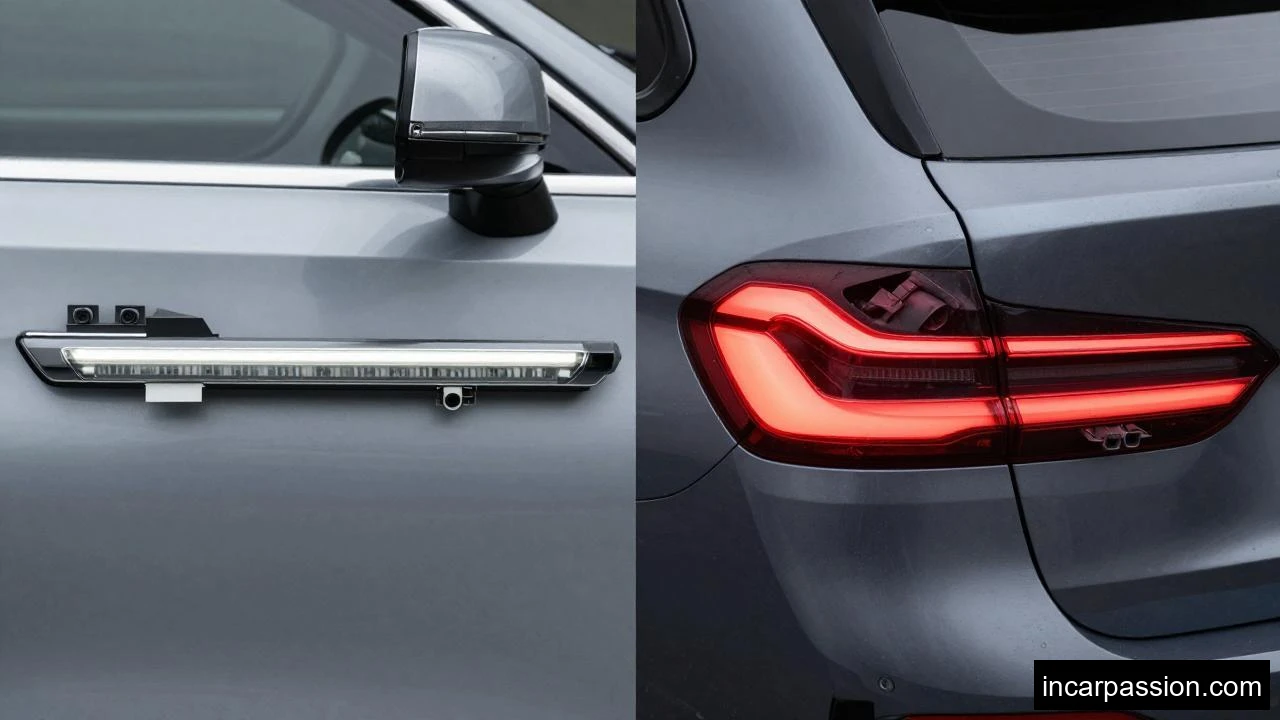
One thing we tell new buyers directly: a good sample does not guarantee a good production lot.
The common gap points are:
– LED bin consistency from lot to lot
– adhesive quality changing by season
– clip tolerance variation after mold maintenance
– packaging compression damaging long light guides in transit
– firmware variation in low-cost controllers
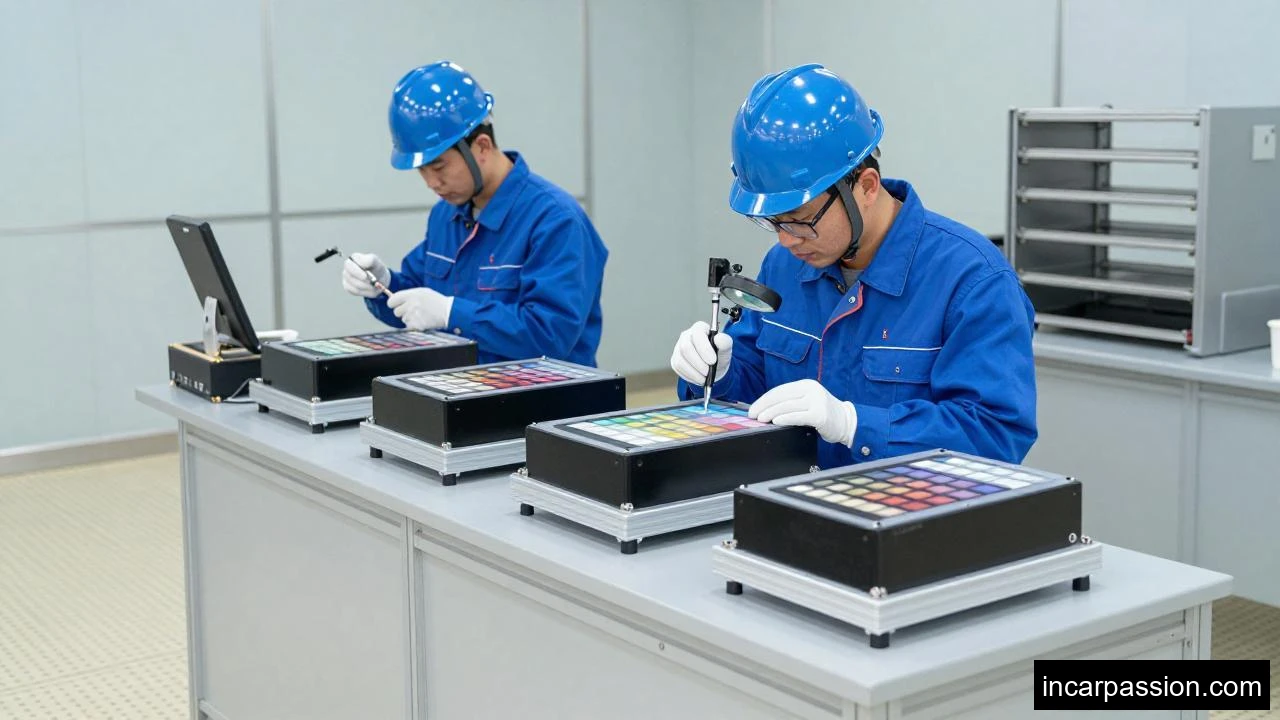
In our QC process, we usually check:
– 100% lighting test before packing
– connector polarity verification
– random vibration test on assembled modules
– color/brightness comparison against golden sample
– aging test, commonly 2-4 hours powered on before shipment for higher-end orders
For reference on vehicle lighting and compliance topics, it’s useful to review the broader standards context from SAE International and product-safety guidance from UL Solutions.
How we’d choose for three different B2B strategies
1. Premium BMW specialist brand
Choose:
– OEM-style door light guides
– matched RGB footwell modules
– branded packaging
– strict color bin control
– MOQ 100-300 sets
Why:
Better photos, better installer confidence, lower return rate.
2. Marketplace-driven volume seller
Choose:
– simplified door + footwell kit
– limited color modes
– reliable RF or Bluetooth controller
– compact packaging
– MOQ 100 sets to start
Why:
Easier to hold margin while keeping support manageable.
3. Distributor testing demand in one region
Choose:
– sample run of 50-100 sets
– one fitment range only
– clear install manual
– one color family or standard RGB
– no app customization at first
Why:
You learn fast without carrying too much SKU risk.
Hook: The best first BMW 5 Series ambient lights SKU is usually not the most advanced one. It’s the one your channel can install correctly and resell without confusion.
FAQ
Are door lights or footwell lights more important for BMW 5 Series ambient lights?
For visual impact, door lights matter more. They’re in the user’s direct line of sight and shape the premium feel. For warranty control, footwell lights often matter more because connectors, heat, and mounting issues show up there first. If budget is limited, we usually strengthen the door optics first and the footwell hardware second.
What’s the usual MOQ for BMW 5 Series ambient light kits?
For standard kits, we commonly see 50-100 sets MOQ. For private label packaging, 100-300 sets is more typical. If you want app branding, custom controllers, or new vehicle-specific tooling, the practical MOQ often rises to 300-1,000 sets depending on the supplier and customization level.
What ex-works price should a brand expect?
A realistic range is USD 58-92/set for an OEM-style 4-door + 2-footwell RGB kit. Door-only kits are often USD 39-68, and footwell-only kits USD 8-18. If you add custom packaging, app control, and tighter QC, your price moves up accordingly.
Can one BMW 5 Series kit fit all model years?
Usually no. The BMW 5 Series includes different platforms and trim structures. Harness lengths, brackets, connectors, and visible strip lengths often change by generation and sometimes by market. We always recommend validating by platform, year range, wheelbase, and steering side before mass order.
Which materials are best for long-term durability?
For door light guides, PMMA is usually the best for optical clarity. For housings and structural parts, PC/ABS or ABS can work well. For footwell lenses, we prefer decent-grade PC or frosted diffuser materials that handle heat better than the cheapest plastics. Connector quality is just as important as lens material.
Is app control necessary for commercial success?
Not always. App control helps marketing, but it also increases support work. If your target channel is installer-based or price-sensitive, a stable RF or basic Bluetooth solution may perform better commercially. App control makes more sense when your retail position is above roughly USD 129 and your buyers expect more interactive features.
Final recommendation for brand founders
If we were launching a B2B-ready BMW 5 Series ambient lights line today, we’d start with one focused SKU:
– 4-door OEM-style light guide set
– 2 matched RGB footwell modules
– pre-labeled harnesses
– 12V controller with simple Bluetooth or RF control
– MOQ 100 sets
– target ex-works cost USD 65-85
– target retail depending on market: USD 149-249
That combination is usually the safest balance of visual effect, margin, and manageable support.
If your brand position is premium, spend more on optics, harness fit, and connector stability. If your brand position is volume, simplify the feature set before you simplify the hardware. Cheap electronics create complaints, but cheap mechanical fit creates returns.
If you want to discuss a BMW-specific door and footwell program, the right next step isn’t a generic catalog. It’s a fitment review with photos, dimensions, and target price. From there, we can quote the right structure, not just the cheapest one.
CTA: [Request a quote](/) for your BMW 5 Series ambient lighting project with target fitment, MOQ, and packaging requirements.
References & Sources
1. SAE International
2. UL Solutions
3. BMW Official Website

 Audi
Audi BMW
BMW Mercedes Benz
 BYD
BYD BAIC MOTOR
 Cadillac
 Chery
Chery Denza
Denza Ford
Ford Geely/ZEEKR
 Honda
Honda Hyundai Kia
 Jaguar
 Jetour
 Jeep
Jeep Lamborghini
 Land Rover
 Lexus
Lexus Li Auto
 Mazda
Mazda Nissan
 Porsche
 Tesla
Tesla Toyota
 Volkswagen
 Volvo
Volvo