

BMW 3 Series Mood Lighting: Frequently Asked Questions for Retailers and Owners

If you sell, source, or install BMW 3 Series mood lighting, you’ve probably heard the same questions over and over: Which generation fits? OEM-style or universal? How difficult is the install? What starts failing after 6 months? And for retailers, what kind of margin actually makes sense?
We build these kits in our factory, and from what we’ve seen on production, QC, packing, and after-sales reviews, the BMW 3 Series stays near the top of the request list. Owners want that factory look, just without dealer-level retrofit pricing. For B2B buyers, it’s also a fairly practical SKU: steady demand, clear model segmentation, and manageable MOQ starting from 20-50 sets depending on packaging.
In our own first-hand experience, BMW 3 Series programs also tend to be more repeatable than some niche platforms. Once fitment is validated by generation, retailers can build cleaner product pages, installers can standardize labor quotes, and spare-part planning becomes easier. That combination is one reason this SKU often performs well for resellers who already carry ambient interior lighting, BMW retrofit lighting, RGB/RGBW cabin lights, door trim light guides, and OEM-style automotive LED kits.
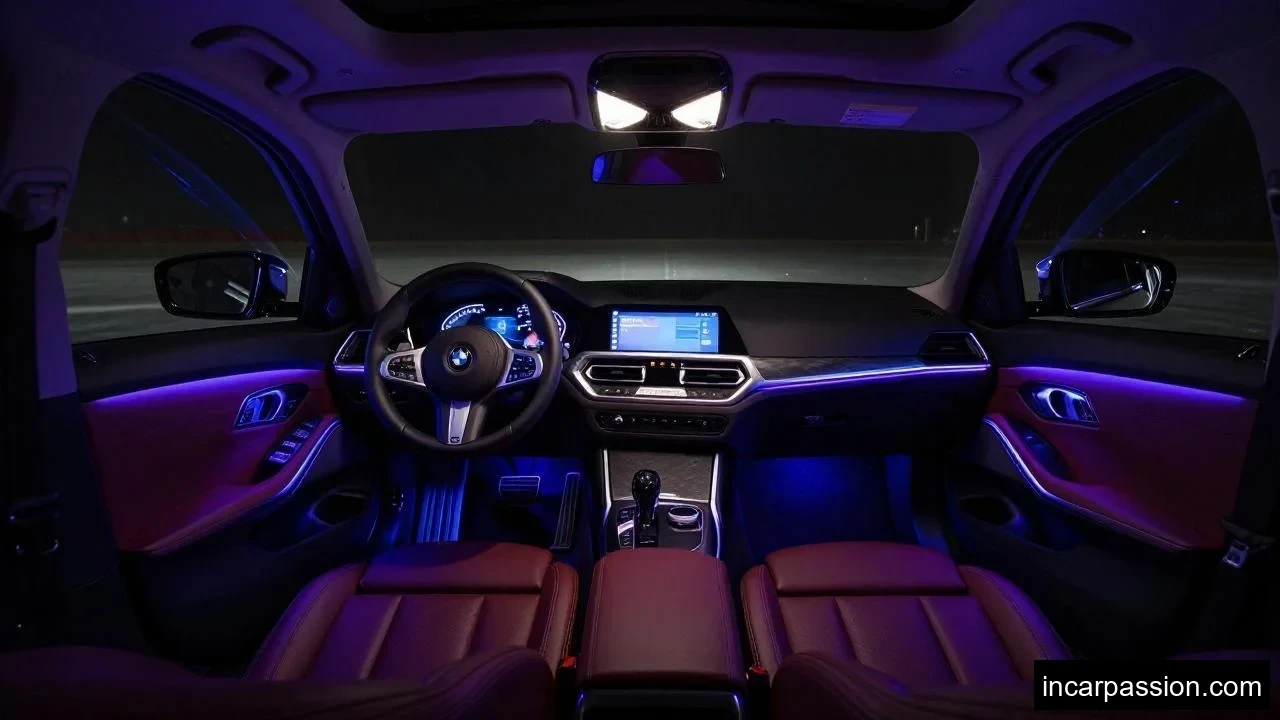
This FAQ is for brand founders, resellers, installers, and end owners who want real numbers before they buy.
Why is BMW 3 Series mood lighting such a popular upgrade?
Because the visual impact is big, while the hardware cost usually stays fairly reasonable. On a BMW 3 Series, adding dashboard trim light, 4-door light strips, footwell lamps, center console lighting, and speaker surrounds can change the whole cabin for roughly USD 95-220 landed kit cost in B2B sourcing, depending on generation and feature set.
In our factory orders, the most common retail-ready kit structure includes:
– Dashboard + 4 doors + center console
– 4 footwell modules
– 1 controller
– 1 wiring harness set
– Optional speaker light rings
– Optional wireless app or OEM iDrive sync module
For retailers, that matters because the before/after is easy to see. For owners, it matters because they can get close to an OEM look without replacing the full interior trim set.
If you’re comparing broader [car ambient light](/) programs or planning to expand into [car mood lighting](/) categories, BMW 3 Series is usually a safer place to start than lower-volume luxury models.
There is also a strong buyer psychology factor here. The 3 Series is one of BMW’s most recognized global nameplates, and cabin upgrades on popular premium sedans typically convert better than obscure fitments because customers can easily find examples, install videos, and peer feedback. In practical retail terms, that lowers education cost.
From an installer viewpoint, mood lighting is attractive because it sits in a sweet spot between cosmetic upgrade and perceived luxury retrofit. Compared with larger mechanical modifications, it offers:
– Lower warranty exposure than powertrain parts
– Easier visual merchandising
– Strong social-media appeal in photos and short video
– Clear upsell potential into speaker rings, footwells, and app control
– Bundling opportunities with window tint, audio, and trim accessories
Which BMW 3 Series generations are usually supported?
Most aftermarket demand is for:
– F30/F31/F34: roughly 2012-2019
– G20/G21: roughly 2019-present, depending on market
– Some suppliers also cover E90/E91/E92/E93, but fitment consistency is lower
This part matters: “BMW 3 Series” is not one single product. Door panel geometry, trim clip positions, dashboard seam width, and controller protocols all change by generation.
Comparison: fitment by generation
| Generation | Typical years | Aftermarket demand | Installation difficulty |
|---|---|---|---|
| E90/E91/E92/E93 | 2005-2013 | Medium | Medium to high |
| F30/F31/F34 | 2012-2019 | High | Medium |
| G20/G21 | 2019-present | Very high | Medium to high |
| Long-wheelbase regional variants | Varies | Moderate | Depends on trim and market |
Engagement hook: If a supplier can’t explain the difference between F30 door insert length and G20 dashboard light routing, they’re probably just selling a generic kit.
More detailed fitment notes by chassis
To improve sourcing accuracy, we usually break BMW 3 Series ambient lighting demand into these sub-groups:
– F30 sedan
– F31 touring/wagon
– F34 Gran Turismo
– G20 sedan
– G21 touring
– Regional long-wheelbase versions, especially in China-market programs
Why this matters in real factory work: a “BMW 3 Series” box label is not precise enough. We’ve seen buyers use one shared carton name, then discover that:
– front door fiber lengths differ,
– dashboard trim geometry changes,
– center-console routing points move,
– speaker ring diameters vary by audio package,
– and harness branch lengths need revision.
For retailers and importers, ask for the VIN-based fitment confirmation process or at least a trim-level checklist. This is especially important when customers have:
– Harman Kardon or base audio
– left-hand drive vs right-hand drive
– factory ambient lighting vs no ambient lighting
– sedan vs touring body style
– regional infotainment differences
Comparison table: generation-specific buying considerations
| Factor | E90/E91/E92/E93 | F30/F31/F34 | G20/G21 |
|---|---|---|---|
| Typical aftermarket demand | Medium | High | Very high |
| Best kit type | Model-specific if available | OEM-style fiber kit | OEM-style fiber or smart integration kit |
| Panel geometry tolerance | Less forgiving on older trims | Stable and widely tooled | More electronics-sensitive |
| Common buyer goal | Modernize older cabin | OEM-look upgrade | Premium sync and full-zone effect |
| Common risk | Inconsistent fitment | Supplier quality variation | Protocol/debug issues |
| Retailer recommendation | Sample-test first | Strong core SKU | Keep sub-parts and support ready |
OEM-style kit or universal LED strip: which is better?
For BMW 3 Series, OEM-style kits almost always win on appearance and resale value.
Universal strips are cheaper, usually USD 18-45 per set ex-factory, but they often come with the same complaints:
– Uneven brightness at corners
– Visible glue line
– Light leakage at trim gaps
– Shorter life in hot climates
– More customer complaints about “cheap look”
OEM-style molded or model-specific fiber kits are usually USD 68-155 per set ex-factory, before speaker rings or special controllers. They cost more upfront, yes, but in our experience the return rate is lower.
> Pro Tip
> For retailers, ask your supplier for the exact visible light width. For BMW 3 Series, we usually recommend a 3 mm to 5 mm visible line. Wider than 6 mm tends to look aftermarket rather than factory-style.
Comparison: OEM-style vs universal kits
| Type | Typical ex-factory price | Main material | Best for | Common complaint |
|---|---|---|---|---|
| Universal LED strip kit | USD 18-45/set | PVC strip + basic LED | Budget retail | Visible wiring and uneven fit |
| Model-specific fiber kit | USD 68-155/set | PMMA fiber + ABS trim parts | OEM-style resellers | Higher tooling cost |
| Smart app-controlled kit | USD 95-220/set | Fiber + PCB controller + harness | Premium upgrade brands | More protocol debugging |
| Full speaker-ring package | USD 135-260/set | ABS rings + LEDs + controller | High-ticket installers | Longer install time |
If your store already sells [car led strip light](/) or [automotive interior lights](/), it’s tempting to push universal kits. We only do that when the customer is clearly prioritizing price over appearance.
Decision framework: when to choose each type
Use this simple buyer path:
| Buyer situation | Best choice | Why |
|---|---|---|
| Lowest entry price matters most | Universal LED strip kit | Lowest cost, faster sales to budget segment |
| Customer wants factory-like seam lighting | Model-specific fiber kit | Better diffusion, hidden source, cleaner fit |
| Installer sells premium packages | Smart app-controlled kit | More features, higher average order value |
| Shop focuses on visual show-car upgrades | Full speaker-ring package | Strongest demo effect and upsell potential |
In our own order reviews, the most profitable retailers are usually not the ones buying the cheapest kit. They are the ones choosing the correct product tier for the customer segment and controlling install expectations.
What does a complete BMW 3 Series mood lighting kit usually include?
A serious kit usually includes:
– 1 main controller
– 4 door light modules or fibers
– 1 dashboard light strip
– 1 center console light section
– 2 or 4 footwell lights
– 1 power harness
– T-harness or CAN adapter if designed for OEM integration
– Installation accessories: pry tools, clips, double-sided tape, screws, cable ties
Common optional upgrades:
– 4 tweeter/speaker rings
– 2 rear speaker rings
– APP control
– Music rhythm mode
– 64-color mode
– Door handle bowl lights
– Cupholder light
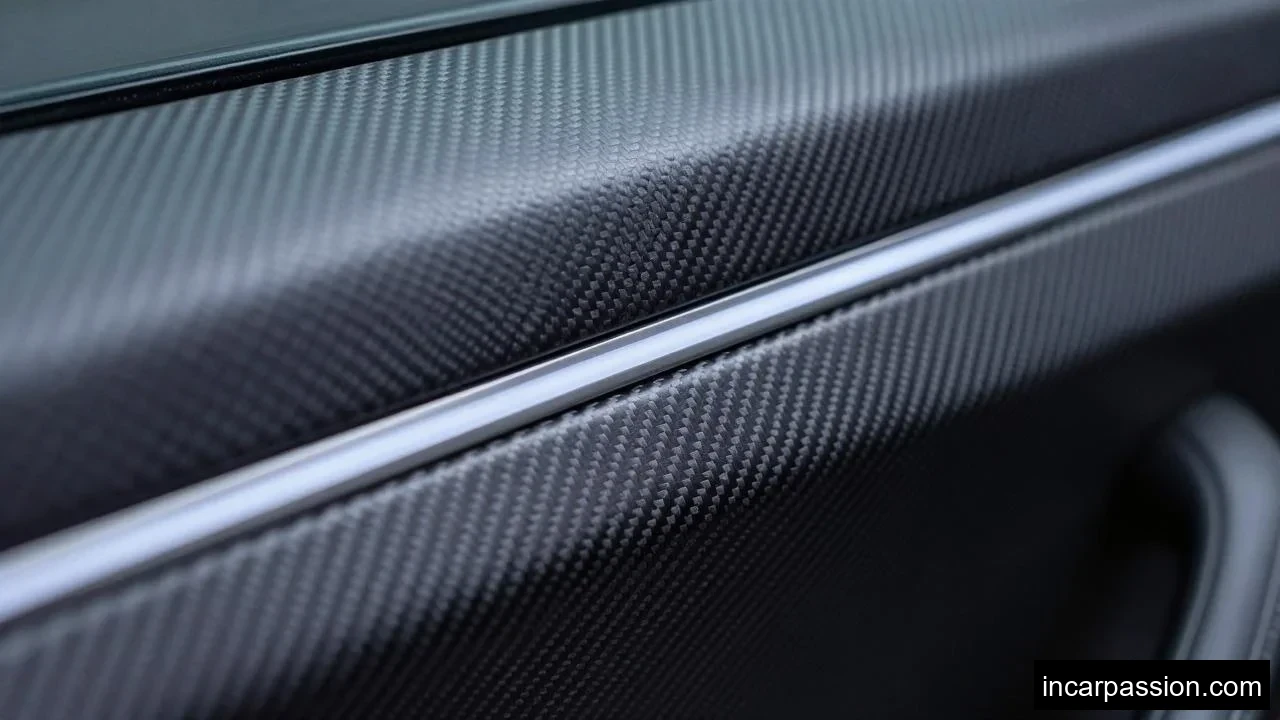
The trim material matters too. Better kits use PMMA optical fiber, ABS injection parts, and UL-rated wiring, often 22 AWG to 24 AWG for signal and low-current lighting sections.
Material and component details buyers should ask for
For B2B sourcing, “full kit” is still not detailed enough. We recommend asking for:
– PMMA optical fiber diameter or profile spec
– ABS grade for molded trim carriers
– PCB coating or conformal protection details
– Connector type and lock structure
– Wire insulation temperature rating
– Fuse protection on power input
– Controller housing material
– Light-source LED chip type if available
In our factory, the kits that age better in hot-weather markets usually have better consistency in three places: fiber transparency, connector retention, and tape adhesion. The LED itself often gets the most attention in sales copy, but for actual claims and returns, the mechanical parts matter just as much.
Is 64-color BMW 3 Series mood lighting real, or just marketing?
Usually it’s real, but how it’s implemented can vary quite a bit.
Some kits use a controller with RGB or RGBW mixing and can generate 32, 48, or 64 selectable colors. But on lower-cost controllers, a lot of those shades are so close together that the customer won’t really care. In actual use, people keep going back to about 8-12 colors.
If a supplier advertises 64 colors, ask:
1. Is it RGB or RGBW?
2. Can zones change independently?
3. Is brightness adjustable in at least 5 levels?
4. Does the color match across dashboard and doors within a 10% brightness tolerance?
5. Is there memory after ignition off?
In our QC work, the complaint that causes the most trouble isn’t “not enough colors.” It’s mismatched color tone between left door, right door, and dashboard.
Engineer insight: RGB vs RGBW in real use
From an engineering and customer-experience perspective:
– RGB is usually enough for mass-market aftermarket kits.
– RGBW can improve white tones and pastel shades.
– Better controllers manage color consistency more smoothly during dimming.
– Poorly tuned controllers can make white look blue or purple, especially across different zones.
In batch inspection, we pay close attention to white, amber, and ice blue because those colors tend to reveal inconsistencies fastest. A kit that looks acceptable in purple may still fail visually in white.
How difficult is installation on a BMW 3 Series?
For an experienced installer:
– Basic door + dash kit: about 3.5 to 5.5 hours
– Full kit with speaker rings and footwells: about 6 to 9 hours
For a first-time DIY owner:
– Usually one full day
– Sometimes two days if door cards are removed slowly and carefully
The LEDs aren’t usually the hard part. The hard part is everything around them:
– Door panel removal without clip damage
– Routing fiber or strip through tight trim seams
– Hiding harnesses around airbags and window tracks
– Matching left/right brightness
– Avoiding rattles after reassembly
> Common Mistake
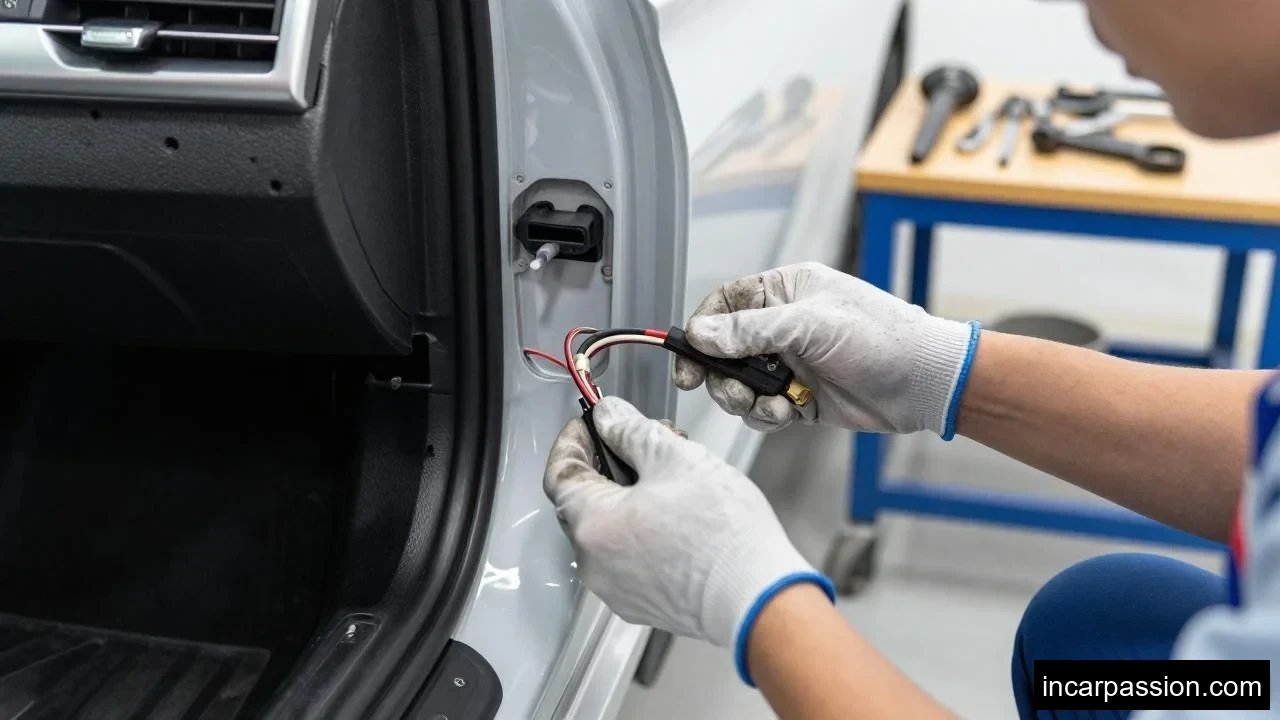
> Buyers focus on controller features and ignore harness quality. A cheap 0.08 mm² wire may work at first, but we’ve seen voltage drop, flicker, and broken conductors after repeated door opening. We prefer 0.2 mm² to 0.35 mm² for moving-door sections.
For brands that also sell [car lighting upgrade](/) or [vehicle ambient light](/) products, installation support content often does more to close the sale than the spec sheet.
Installation risk checklist
Before installation, we suggest confirming:
– exact chassis and model year,
– left-hand drive or right-hand drive,
– whether a T-harness is included,
– whether door cards must be fully removed,
– whether trim cutting is required,
– whether airbags or moving window components are near the routing path,
– and whether the customer expects OEM control integration or only app control.
Real-world installer case example
In one batch review for a retailer-focused F30 program, the hardware itself passed electrical testing, but installers reported extended labor time because the door harness branch was slightly short for their preferred routing path. The issue was not dramatic on paper, yet it added enough friction to create complaints. After we revised harness length and clip positions, the product performed better in the field without changing the controller. That kind of issue is why sample installation matters more than catalog claims.
Does aftermarket mood lighting damage the original BMW interior?
It depends on the kit design and the installation method.
A well-designed model-specific kit should require:
– Minimal visible cutting
– Use of existing panel channels where possible
– Reversible T-harness connection in better versions
– No screw penetration into visible trim
But some lower-cost kits need:
– Hot glue
– Manual groove cutting
– Drilling hidden plastic
– Splicing into power lines
That’s a major difference for retailers. A lot of return requests start with “product bad,” when the real issue is an overly aggressive install method.
> Engineering Note
> For BMW 3 Series door trims, clip retention force and panel warpage tolerance matter more than many buyers expect. If the added light guide or ABS carrier changes trim thickness by even 1.0-1.5 mm at the wrong clip point, the panel may not sit flush and can create squeaks over 3,000-5,000 km.
What “non-destructive” really means
Buyers should define this term clearly, because suppliers use it loosely. In practice, “non-destructive” may mean:
– no visible surface cutting,
– reversible power connection,
– hidden trimming only,
– or simply “no drilling into metal.”
We prefer to describe installation in exact terms rather than use broad marketing language. For retailers, that reduces disputes.
What usually fails first in BMW 3 Series ambient lighting kits?
Based on factory after-sales records, the top failure points are:
1. Door hinge wiring fatigue
2. Controller instability
3. Poor adhesive backing in summer heat
4. Color inconsistency between batches
5. Loose connectors after vibration
Cabin temperatures can go beyond 60°C in parked summer vehicles. If the kit uses weak tape or a low-grade plastic diffuser, problems show up quickly.
Ask your supplier about these specifics:
– Tape brand: 3M preferred
– Connector cycle life: target 50+ mating cycles
– Controller operating range: ideally -20°C to 70°C
– Burn-in test: at least 2-4 hours
– Aging test for premium programs: 24-48 hours
Factory experience: what after-sales data usually shows
Looking at actual claim patterns, early failures are rarely random. They usually cluster around:
– moving-door harness sections,
– weak solder points inside lower-cost controllers,
– loose connector locks,
– low-grade tape in high-heat regions,
– and inconsistent diffuser finishing between batches.
One recurring lesson from our production side: when buyers negotiate price down too aggressively, the first downgraded items are often not visible in photos. They are the exact parts that affect field reliability.
Comparison table: common failure points and prevention
| Failure point | Typical cause | Symptom | Prevention |
|---|---|---|---|
| Door hinge wiring fatigue | Undersized conductor or poor flex life | Flicker or intermittent outage | Use 0.2 mm² to 0.35 mm² in moving-door sections |
| Controller instability | Weak PCB design or heat issues | Random reset, color mismatch | Require burn-in and temperature-range validation |
| Adhesive failure | Low-grade tape, high cabin heat | Light strip lifts or rattles | Use 3M preferred tape and heat-resistant surfaces |
| Connector loosening | Weak lock or vibration | Zone failure after reassembly | Ask for 50+ mating cycles and locking connectors |
| Batch color inconsistency | LED binning variance | Different tone across zones | Batch QC with brightness and color checks |
What MOQ should a retailer expect?
For BMW 3 Series mood lighting, realistic factory MOQ depends on the level of customization:
– Standard box, standard firmware: 20-30 sets
– Custom logo packaging: 50-100 sets
– Custom app branding: often 100-300 sets
– Exclusive mold changes: usually 300+ sets or tooling fee
Typical sample lead time is 3-10 days. Bulk production is commonly 15-35 days, depending on whether trims, speaker rings, and branded packaging are included.
If you’re building a broader [automotive led lighting](/) or [car tuning parts](/) line, BMW kits can work well as a mid-price anchor product.
MOQ strategy by buyer type
| Buyer type | Suggested starting plan |
|---|---|
| New online retailer | Start with 20-30 sets standard box |
| Installer shop with showroom | Test 20-50 sets plus one demo unit |
| Private-label brand | Move to 50-100 sets with custom packaging |
| Established premium brand | Consider 100-300 sets with branded app and spare-parts plan |
From our side, the healthiest B2B launches usually include not just sellable units, but also:
– one showroom sample,
– spare controllers,
– spare door harnesses,
– revised install guide,
– and batch-labeled QC records.
What wholesale margin is realistic?
This depends on your market, install bundle, and warranty promise, but these are common numbers:
– Ex-factory: USD 68-155 for a model-specific core kit
– Importer/brand landed cost: often USD 90-190
– B2C online kit sale: USD 189-399
– Installed package retail: USD 350-900
Why the big range? Labor. A clean BMW 3 Series install can easily take 4-8 labor hours, and shop hourly rates range from USD 35 to USD 150+ depending on region.
Engagement hook: If a competitor is selling a “full BMW 3 Series 64-color kit” at USD 129 retail, it’s worth asking what got cut: harness quality, fitment accuracy, or after-sales support.
Margin planning framework for retailers
To evaluate a SKU properly, don’t only compare purchase price. Compare:
– inbound freight,
– local duties and VAT if applicable,
– packaging cost,
– sample and photo/video creation cost,
– install support time,
– replacement part reserve,
– warranty claim rate,
– and customer acquisition cost.
A kit that is USD 12 cheaper at purchase can become less profitable if it creates:
– more fitment questions,
– more color inconsistency claims,
– more installer callbacks,
– and more reshipments.
Example decision model
| Metric | Budget kit | Better OEM-style kit |
|---|---|---|
| Purchase price | Lower | Higher |
| Return risk | Higher | Lower |
| Customer satisfaction | Lower | Higher |
| Install predictability | Lower | Higher |
| Brand positioning | Budget | Premium/mid-premium |
| Long-term margin quality | Often weaker | Often stronger |
How should retailers evaluate a supplier?
We usually suggest a simple 8-point check:
1. Ask for installed photos by generation
2. Request video of color switching
3. Confirm exact fitment list
4. Verify material list: PMMA, ABS, wire gauge
5. Ask about warranty length: common is 12 months
6. Ask for failure rate data: even estimated
7. Check if replacement sub-parts can be ordered
8. Test one sample in a real install before bulk PO
A supplier who only sends renderings? That’s not enough. Real BMW 3 Series interior geometry is pretty unforgiving.
Expanded supplier scorecard
For more disciplined sourcing, score suppliers on these categories from 1-5:
| Category | What to look for |
|---|---|
| Fitment accuracy | Installed proof by chassis and trim |
| Material transparency | PMMA, ABS, wire gauge, connector details |
| QC process | Burn-in, brightness check, batch labeling |
| Communication | Fast answers, technical detail, revision ability |
| After-sales support | Spare parts, replacement policy, troubleshooting |
| Documentation | Install guide, photos, videos, warranty terms |
| Commercial flexibility | MOQ, mixed SKU policy, packaging options |
| Stability | Repeatable lead times and batch consistency |
In our experience, the best suppliers are not always the cheapest or largest. They are the ones that can answer technical questions clearly and show real installation evidence.
Buyer’s decision path: how to choose the right BMW 3 Series mood lighting kit
If you are buying for resale, installation, or your own car, this is the simplest path we recommend:
Step 1: Confirm the exact vehicle
Check:
– chassis generation,
– model year,
– body style,
– audio configuration,
– left-hand drive or right-hand drive,
– and whether the car already has factory ambient lighting.
Step 2: Define the target look
Choose between:
– budget decorative lighting,
– close-to-OEM seam lighting,
– or premium multi-zone smart lighting with speaker rings.
Step 3: Match product tier to customer expectation
– Price-first buyer: universal kit
– OEM-look buyer: model-specific fiber kit
– Premium buyer: smart integrated kit
– Installer showroom/demo car: full speaker-ring package
Step 4: Validate installation method
Ask whether the kit uses:
– T-harness or splice,
– hidden routing or visible add-on strip,
– trim-specific carriers,
– and reversible or semi-permanent installation.
Step 5: Verify reliability basics
Confirm:
– wire gauge,
– tape brand,
– controller temperature range,
– burn-in test,
– and replacement parts policy.
Step 6: Check business economics
Review:
– MOQ,
– sample lead time,
– landed cost,
– retail price range,
– install labor time,
– and margin after warranty reserve.
Clear recommendation by buyer type
– For most retailers: start with F30/F31/F34 or G20/G21 model-specific fiber kits, not generic strips.
– For premium installers: carry a full package with speaker rings, footwells, and app control.
– For first-time importers: avoid exclusive mold changes until you validate local demand.
– For end owners wanting OEM look: prioritize fitment and installation quality over maximum color count.
FAQ: Real questions from retailers and owners
1. Can BMW 3 Series mood lighting be added if the car did not come with factory ambient lighting?
Yes. Most aftermarket kits are designed for vehicles without original ambient lighting. They use an independent controller and harness. Integration level varies: some are simple standalone systems, while others can sync with factory controls on selected trims.
2. Will it look OEM or obviously aftermarket?
It depends on seam fit, diffuser quality, and brightness calibration. A 3-5 mm light line with hidden source and even diffusion can look close to OEM. A glued-on strip with visible LED dots will not.
3. Is coding required?
Usually no for standalone kits. Sometimes yes for advanced integration modules. For many F30 and G20 aftermarket kits, installation is more electrical/mechanical than software-heavy, but this changes by trim and region.
4. Does it affect warranty?
That depends on local dealer policy and installation method. A reversible T-harness install is safer than cutting original wires. Owners should confirm with their dealer before installation.
5. Can the lights change with music?
Yes, many smart controllers offer music mode. In real life, this is more of a selling feature than an everyday feature. Most owners use fixed color or slow fade mode after the first week.
6. Are these kits waterproof?
Interior kits are not fully waterproof products. Most are made for dry cabin use. Door-area components should at least tolerate humidity and temperature cycling, but they are not exterior-grade IP67 systems unless specifically stated.
7. How long do the LEDs last?
A reasonable target is 20,000-30,000 hours for the LED source under controlled conditions. In actual use, controller quality, heat management, and wiring usually matter more than LED chip claims.
8. What color is most popular?
For BMW 3 Series, our order history shows ice blue, purple, amber, and white are the most requested. Multi-color kits are popular, but blue shades still lead.
9. Can retailers order mixed BMW models in one MOQ?
Sometimes. Many factories allow mixed SKUs if total quantity reaches the minimum order value. For example, 30 total sets mixed across BMW 3 Series and 5 Series may be accepted, but custom packaging often requires per-SKU MOQ.
10. What spare parts should a retailer stock?
We recommend keeping:
– 5% extra controllers
– 3-5% extra door harnesses
– 1-2% extra light fibers/strips
– Spare clips and connectors
This cuts after-sales cost and speeds up replacements.
11. Is brighter always better?
No. Over-bright ambient lighting can create windshield reflection and eye fatigue. We usually tune for decorative lighting, not task lighting. A dimmable range with at least 5 levels is better than maximum output.
12. What documents should an importer ask for?
At minimum:
– Packing list
– Product spec sheet
– Warranty terms
– Installation guide
– Test photos or videos
– If needed for your market, compliance paperwork relevant to low-voltage electronics
13. What is the difference between app control, button control, and OEM-sync control?
– App control offers the most feature flexibility and is common in aftermarket kits.
– Button control is simpler and sometimes more reliable for entry-level products.
– OEM-sync control is the most attractive to premium buyers, but it can involve more protocol validation and trim-specific compatibility checks.
14. Do speaker rings really improve sales?
Usually yes for visual merchandising. In our showroom and dealer-sample experience, illuminated tweeter and speaker rings increase perceived value quickly, especially in social media content and night photography.
15. Should importers stock E90 kits or focus on F30/G20?
For most markets, we would prioritize F30/F31/F34 and G20/G21 first. E90 demand still exists, but fitment variability and older interior conditions can increase support workload.
Final advice for brand founders
If you’re building a BMW 3 Series mood lighting line, don’t choose based on catalog photos alone. Choose based on:
– Fitment by generation
– Harness reliability
– Color consistency
– Install time
– Replacement parts availability
– Whether the factory understands after-sales
That’s what protects margin.
We’ve seen retailers lose money on a kit that was USD 12 cheaper, just because one bad batch created hours of customer support, replacement shipping, and installer complaints. With this product, stable quality usually beats the lowest quote.
If you want to expand beyond one SKU, it also helps to group BMW ambient products with adjacent [interior car lights](/) and [auto ambient lighting](/) categories so customers can trade up into more complete cabin upgrade packages.
Our practical recommendation
If you need one clear recommendation, it is this:
– Start with a model-specific F30/F31/F34 or G20/G21 kit
– Prefer PMMA fiber + ABS trim parts
– Require 0.2 mm² to 0.35 mm² wire in moving-door sections
– Ask for 3M preferred tape
– Validate 3-5 mm visible light width
– Test one sample install before placing volume orders
– Keep spare controllers and harnesses from day one
That approach is not the absolute cheapest, but from our factory and after-sales perspective, it is the most dependable path for both retailers and owners.

If you’re sourcing for your own brand, we can help you compare fitment options, packaging, wiring specs, and MOQ before you place a trial order.
CTA: [Request a quote](/)
References & Sources
1. BMW 3 Series Sedan Overview | BMW USA
2. BMW 3 Series Sedan | BMW UK
3. BMW 3 Series | Wikipedia
4. BMW Group
5. 3M
6. UL Solutions

 Audi
Audi BMW
BMW Mercedes Benz
 BYD
BYD BAIC MOTOR
 Cadillac
 Chery
Chery Ford
Ford Geely/ZEEKR
 Honda
Honda Hyundai Kia
 Jaguar
 Jetour
 Jeep
Jeep Lamborghini
 Land Rover
 Lexus
Lexus Li Auto
 Mazda
Mazda Nissan
 Porsche
 Tesla
Tesla Toyota
 Volkswagen
 Volvo
Volvo