

BMW 3 Series Interior Ambient Light vs. Aftermarket LED Strips: Which is Better?
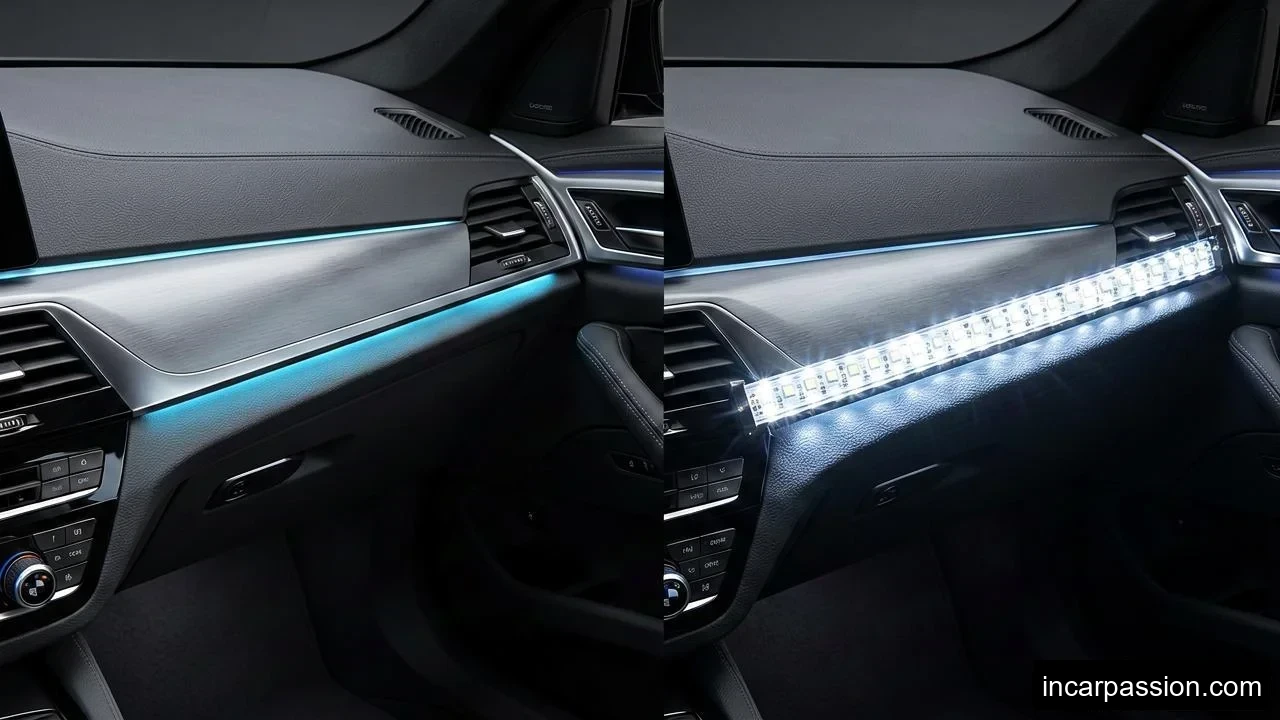
If you’re shopping for a BMW 3 Series interior ambient light upgrade, the first question is usually pretty straightforward: do you stick with a factory-style setup, or do you save some cash and go with universal LED strips?
We build both OEM-style ambient light systems and aftermarket strip-based kits in our factory. Here’s the short, honest version:
* If you want clean fitment, factory menu control, even light output, and higher resale value, BMW-style integrated ambient lighting is the way to go.
* If you want the lowest entry price and don’t mind visible wiring, hotspotting, or app-only control, aftermarket LED strips can still make sense.
The gap between these two options is bigger than a lot of buyers expect. On paper, both options “add ambient lighting.” In actual production and real-world installation, though, they’re entirely different classes of product. According to automotive interior design studies by the Lighting Research Center (LRC), integrated lighting systems contribute significantly to perceived vehicle value and driver spatial awareness. On the flip side, poorly integrated aftermarket additions can reduce cabin ergonomics and distract the driver at night.
> The 3-Year Test: A $35 strip kit can look great for three weeks on social media. A properly engineered BMW-style kit should still look clean after three summers, three winters, and 500 door slams.
The biggest difference isn’t brightness. It’s how the light gets delivered: a hidden light guide versus an exposed diode strip.
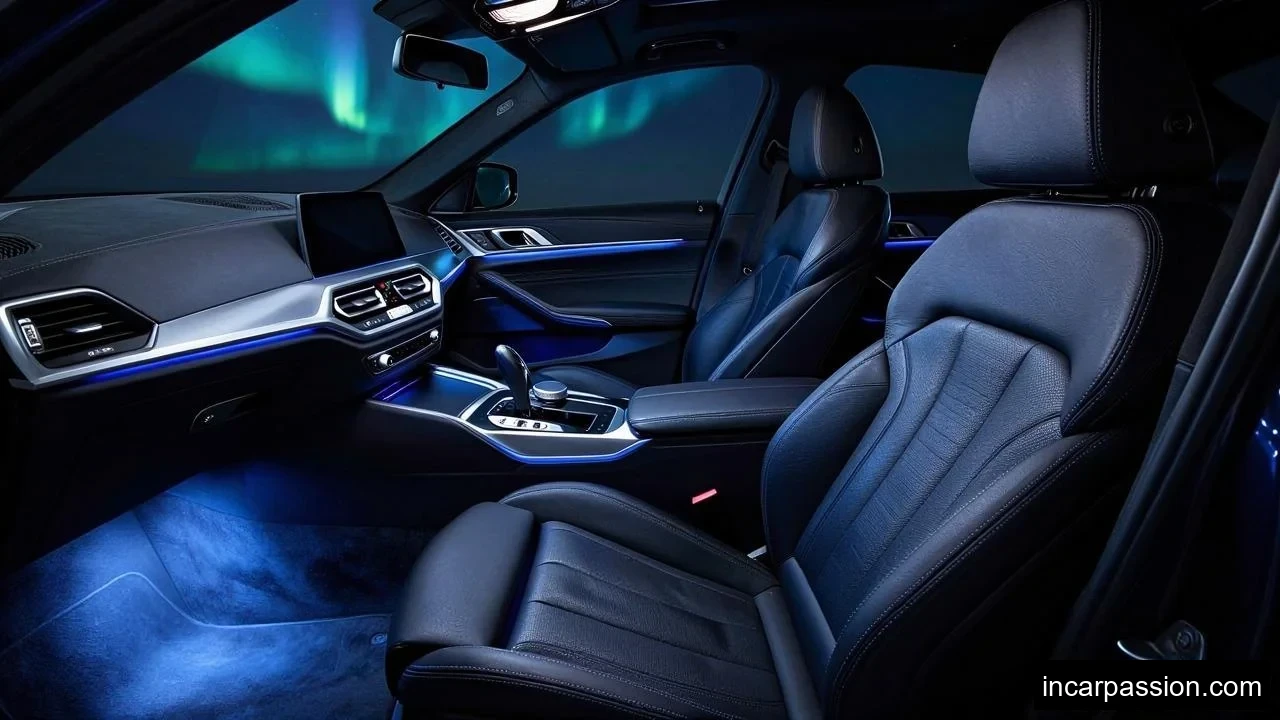
For BMW 3 Series owners—especially G20/G28 buyers—that matters. The cabin already has a premium design language. A cheap strip stuck under the dash often feels out of place next to OEM trims, soft-touch panels, and digital displays.
—
What BMW Factory Ambient Lighting Does Well
BMW’s original ambient lighting is designed into the cabin, not tacked on later. The light source stays hidden behind trim, then spreads through a diffuser or light guide. From what we’ve seen in the factory, that creates four big advantages:
1. Uniform Light Line
Instead of LED points every 10–16 mm, you get a continuous band. We achieve this by using high-purity PMMA (Polymethyl Methacrylate) optical fibers with a refractive index of 1.49, ensuring zero visible hotspots.
2. Stable Color Matching
OEM systems aim for close color consistency from the left door to the right door. Cheap RGB strips often vary by 10% to 20% in hue from one lot to another. Factory-style kits target precise chromaticity coordinates (such as the classic BMW amber at a wavelength of 605–615 nm) in compliance with SAE J578 color specification standards.
3. Integrated Control
On compatible cars, brightness and color can be adjusted through the vehicle interface (iDrive) via LIN-bus (Local Interconnect Network) integration (complying with ISO 17987 standards) instead of a loose RF remote or phone app.
4. Better Long-Term Fit
Factory-style kits use dedicated trim geometry, clips, and harness routing. Universal strips depend heavily on adhesive—and adhesive is usually the first thing to fail.
If you’re comparing options for a [car ambient light](/) upgrade, this is where the price difference comes from. It’s not just “branding.” It’s tooling, fitment, harness design, diffuser quality, and vehicle integration.
—
What Aftermarket LED Strips Actually Offer
Aftermarket LED strips are popular for obvious reasons: they’re cheap, flexible, and easy to sell online. A basic universal kit often includes:
* 4 to 6 LED strips (typically using SMD 5050 or SMD 3838 RGB diodes)
* 12V cigarette-lighter power or 5V USB power
* App or RF remote control
* Double-sided adhesive backing
* RGB or RGBIC (addressable) effects
Typical Retail Prices:
* Basic USB strip kit: $18–$35
* 12V app-controlled strip kit: $35–$80
* Better cut-to-fit diffuser strip kits: $90–$180
At the factory level, universal strip kits are attractive because the Minimum Order Quantity (MOQ) can be low. For some online sellers, the MOQ starts at 50–100 sets. For OEM-style BMW-specific kits, the factory MOQ is more often 200–500 sets per model/version due to the high amortization costs of custom injection molds (which run between $8,000 and $15,000 per trim tool) and harness development.
For the end user, the benefits are pretty clear:
* Low upfront cost
* Easy availability
* Fast DIY installation
* Lots of color effects
But yes, there are trade-offs.
> The Nighttime Reality: The cheaper the strip, the more likely you are to notice every compromise at night: bright dots, loose tape, buzzing controllers, mismatched colors, and reflections on glossy trim.
—
Direct Comparison: Factory-Style Ambient Light vs. Universal LED Strips
| Feature | BMW Factory-Style Ambient Light | Aftermarket LED Strips |
|---|---|---|
| Light Appearance | Continuous, diffused line (PMMA light guide) | Visible LED points or uneven glow (exposed PCB) |
| Typical Installed Look | Integrated into trim (flush fitment, <0.5 mm gaps) | Add-on, surface-mounted (visible wires/tape) |
| Control Protocol | OEM iDrive integration via LIN-bus / CANBUS | App, RF remote, or inline physical controller |
| LED Density | High-density edge-lit modules (hidden) | 30 to 60 LEDs per meter (exposed) |
| Operating Temp Range | -40°C to +85°C (ISO 16750-4 compliant) | -10°C to +50°C (typical limit for cheap PVC) |
| Price Range | $280–$900+ depending on model and coverage | $18–$180 typical |
| Installation Difficulty | Medium to high (requires trim removal) | Low to medium (peel-and-stick) |
| Current Draw | 1.5A to 2.5A max (regulated) | Up to 4.5A (unregulated, high heat) |
| Warranty | 12 to 24 months | 30 to 90 days |
That table looks simple enough, but the real difference shows up in the details.
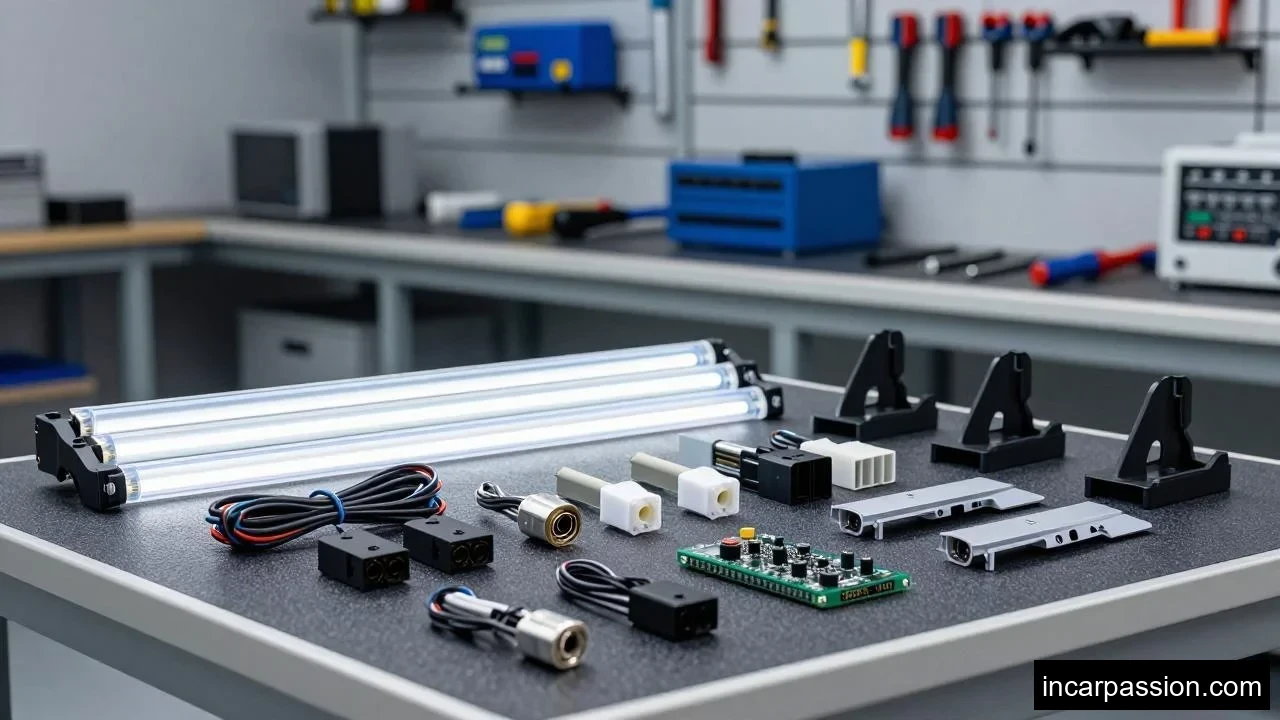
For a BMW 3 Series interior ambient light setup, “factory-style” usually means molded trim parts, optical fiber or PMMA diffuser bars, dedicated harnesses, and vehicle-specific connectors. In our production, common diffuser widths are 8 mm, 10 mm, and 12 mm, with visible light-emitting surfaces around 3–5 mm. Housing materials are usually PC, ABS, or PC/ABS blends (such as Sabic Cycoloy), depending on heat and clip retention requirements.
Universal strips, on the other hand, are often:
* 8 mm or 10 mm flexible PCB
* 30 LEDs/m or 60 LEDs/m
* Adhesive-backed (often using generic acrylic tape)
* Silicone-coated or bare
* Powered by generic controllers
Those products are fine for under-seat glow or hidden footwell lighting. For a clean dash and door-line installation in a BMW 3 Series, though, they’re rarely the best pick.
—
Where BMW 3 Series Owners Usually Regret Going Cheap
We hear the same complaints from end users and dealers again and again:
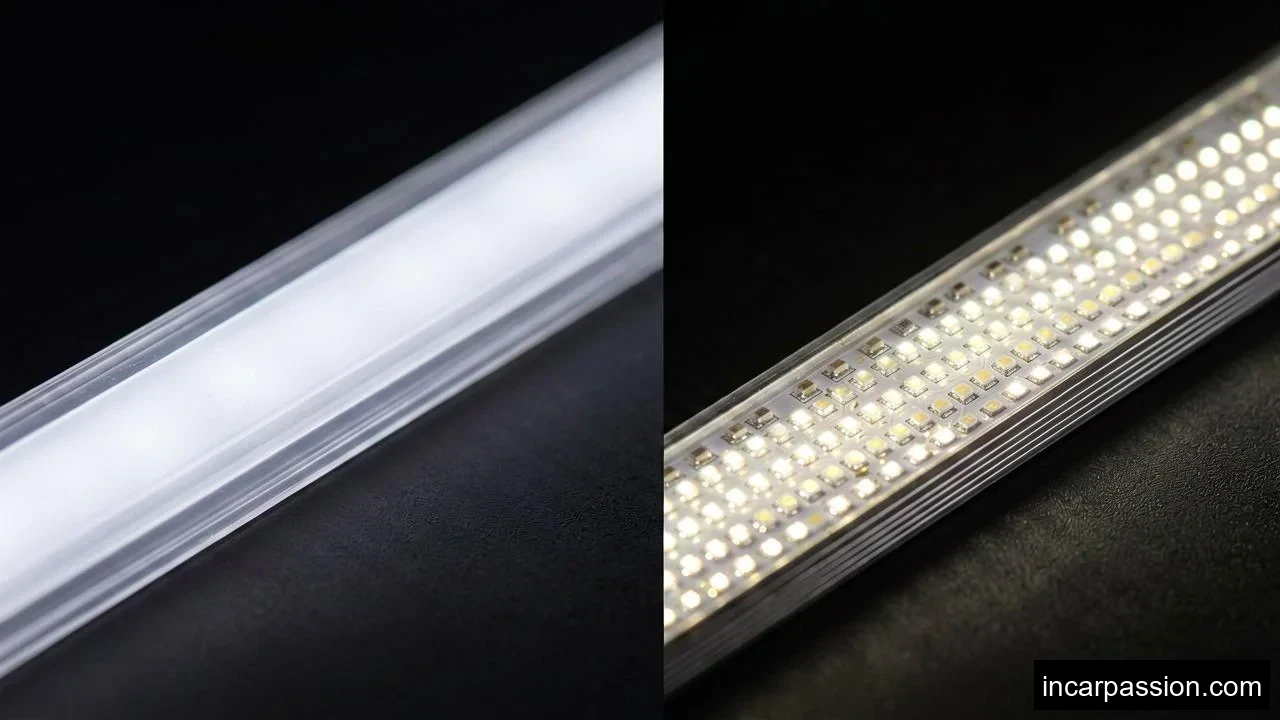
1. Hotspots in the Light Line
If the strip sits too close to a clear lens, you’ll see individual LED points. This is common with low-density strips using 30 LEDs/m. Even 60 LEDs/m can still hotspot if the diffuser wall is too thin or too clear. OEM-style kits use side-emitting light guides that scatter light evenly across the entire length of the tube.
2. Adhesive Failure
Most strip kits use standard double-sided tape. In summer, dashboard surface temperatures can reach 60–75°C (140–167°F) in parked cars. Low-grade tape loses its shear strength at these temperatures, causing the strip to sag and peel within weeks.
3. Controller Noise and CANBUS Issues
Some low-cost controllers create electromagnetic interference (EMI) or high-frequency buzzing during dimming. On modern BMWs, badly designed power taps can lead to voltage fluctuations, flickering, or CANBUS error codes. BMW-style kits feature buck-boost regulators with transient voltage suppression (TVS) diodes to handle voltage spikes (up to 16V during alternator charging cycles) in compliance with ISO 7637-2 standards.
4. Color Mismatch
Door strips look blue, the dash strip looks purple, and the footwell looks greenish-white. Usually, that’s an LED binning issue. Premium factories sort LEDs within a 3-step MacAdam Ellipse to ensure color uniformity, whereas cheap kits use mixed-bin LEDs to save costs.
5. Ugly Daytime Appearance
At night, a lot of kits look acceptable. In daylight, exposed wires, thick strip bodies, and crooked installations become very obvious.
> The Visual Rule: Ambient light is one of the few upgrades you see every single time you drive. That makes bad fitment much harder to ignore than a cheap speaker hidden behind a door panel.
—
The Engineering Side: Why OEM-Style Kits Cost More
A proper BMW-style kit is more than LEDs. The cost stack usually includes:
* Model-specific trim tooling (injection molds designed to match F30 or G20 door panels)
* Light guide extrusion or injection parts
* Anti-scratch coated lens surfaces
* Dedicated harness lengths (wrapped in automotive-grade PET fleece tape)
* Connectors matched to installation points
* Controller with dimming and color logic
* Installation clips or replacement trim panels
In our factory, one vehicle-specific ambient light project can require:
* 2–5 trim tools
* 1 controller housing tool
* Harness validation for 12V input stability (9V–16V operating range)
* Aging tests at 60°C to 85°C for 500+ hours
* 500 to 2,000 cycle connector insertion testing
That’s why a good vehicle-specific [car interior led](/) kit doesn’t sell for $29. The tooling and validation alone are in a completely different league.
—
Brightness is Not the Whole Story
A lot of buyers ask for “the brightest ambient light.” Fair enough. But brightness is often the wrong metric. Too much brightness causes:
* Windshield reflections that block side-mirror views
* Side glass reflections
* Eye fatigue on dark roads
* An aftermarket “arcade” look
For cabin ambient lighting, we usually aim for visual comfort first. A clean line at moderate brightness looks more premium than a harsh strip at full output.
For reference, many universal RGB strips run around 4.8W/m to 14.4W/m. Higher wattage does not automatically mean a better ambient effect. Often it just means more heat and more visible hotspots if the optical design is weak.
If your goal is a tasteful [auto ambient lighting](/) upgrade, the best result is usually:
* Hidden light source
* Uniform diffuser
* Dimmable controller (supporting PWM dimming frequencies >1kHz to prevent visible flicker)
* Warm/cool balanced color options
* Proper trim integration
—
The BMW 3 Series Ambient Light Decision Framework
To help you choose the right path, use this step-by-step decision framework based on your vehicle generation, budget, and expectations.
“`
[Start: What is your BMW 3 Series Generation?]
|
+—> E90 / E92 / E93 (Older Cabin Design)
| |
| +—> Budget < $100? —-> Choose high-quality 12V Diffuser Strips (under-dash/footwells)
| +—> Budget $150+? —-> Choose E90-specific replacement trim kits
|
+—> F30 / F31 / F35 / F80 (Modern Classic)
| |
| +—> Want iDrive Control? -> Must buy BMW-specific LIN-bus integrated kit ($280-$450)
| +—> App Control OK? -> Choose F30-specific replacement trim panels (non-iDrive)
|
+—> G20 / G21 / G28 / G80 (Current Generation)
|
+—> ALWAYS choose BMW-specific integrated kits. The G20 cabin design has
extremely tight tolerances (0.5mm). Universal strips will ruin the OEM look.
“`
Buyer Persona Recommendations
* The Lease Holder: Go with a non-destructive, plug-and-play BMW-specific kit that plugs directly into OEM harnesses. It can be removed before lease return without leaving adhesive residue or spliced wires.
* The DIY Enthusiast on a Budget: If you are working on an older E90, a high-quality 12V diffuser strip kit ($90–$180) offers a good balance of cost and appearance without requiring complex door panel removal.
* The OEM+ Purist: Choose the full LIN-bus integrated kit ($350–$650). It integrates directly with your iDrive system, matches the factory dashboard menus, and retains the car’s resale value.
—
Key Buying Criteria to Evaluate
Before pulling the trigger on any kit, evaluate these four critical factors:
1. Power Source & Safety: Does the kit plug into the cigarette lighter (messy wires), or does it tap into the fuse box/OEM harness using plug-and-play Y-harnesses? Choose Y-harnesses to protect your vehicle’s electrical system.
2. Control Method: Do you want to change colors using the factory iDrive controller, or are you comfortable opening a smartphone app every time you want to adjust brightness?
3. LED Density & Type: Look for kits using at least 120 LEDs/meter or COB (Chip-on-Board) technology if you are using flexible strips, or PMMA solid core light pipes for integrated kits.
4. Current Draw: Ensure the total system current draw does not exceed 2.5 Amps at 12V DC to prevent battery drain or module shutdown by the BMW Power Distribution Box.
—
Installation: What Changes Between the Two Options
Factory-Style BMW Kits
Installation usually involves:
* Removing door panels using plastic pry tools
* Removing dash trim pieces
* Routing harnesses behind OEM panel lines and securing with zip ties
* Tapping ACC, fuse, or vehicle-specific power points (e.g., footwell module / FEM or BDC)
* Connecting to a dedicated controller
* In some versions, coding the vehicle (using BimmerCode or E-Sys) to enable the factory ambient light menu on the iDrive screen
* DIY experienced owner: 4–8 hours
* Professional shop: 3–6 hours (typical labor cost: $150–$300)
Universal LED Strips
Installation usually involves:
* Surface cleaning with isopropyl alcohol
* Sticking strips under trim edges or footwells using adhesive tape
* Connecting USB or 12V cigarette lighter power
* Hiding extra wire behind weatherstripping where possible
* DIY beginner: 45 minutes to 2 hours
* Professional shop: 1–2 hours (typical labor cost: $80–$150)
The difference is pretty obvious: strips are easier. But easier isn’t always better if the end result looks temporary.
> Pro Tip: Buyers often compare only kit price, not the total installed cost. A $40 strip kit plus 2 hours of frustration, visible wiring, and rework after tape failure is not automatically “cheaper” than a $350 vehicle-specific kit that fits right the first time.
—
Cost Breakdown: What You Really Pay For
| Option | Typical Parts Cost | Typical Installed Cost | Best For | Main Downside |
|---|---|---|---|---|
| Universal USB LED strips | $18–$35 | $30–$80 | Budget mood lighting | Weak brightness, obvious add-on look |
| Better 12V diffuser strip kit | $90–$180 | $150–$320 | DIY users wanting cleaner lines | Still not true OEM integration |
| BMW-specific ambient light kit | $280–$650 | $450–$900 | OEM-style finish | Higher upfront cost |
| Premium integrated multi-zone kit | $650–$1,200 | $900–$1,800 | Show cars or high-spec daily drivers | Cost may exceed resale return |
These numbers depend on your local market, labor rates, and coverage area. A front-dash-only kit is very different from a full package covering 4 doors, dashboard, center console, footwells, cup holders, and tweeter surrounds.
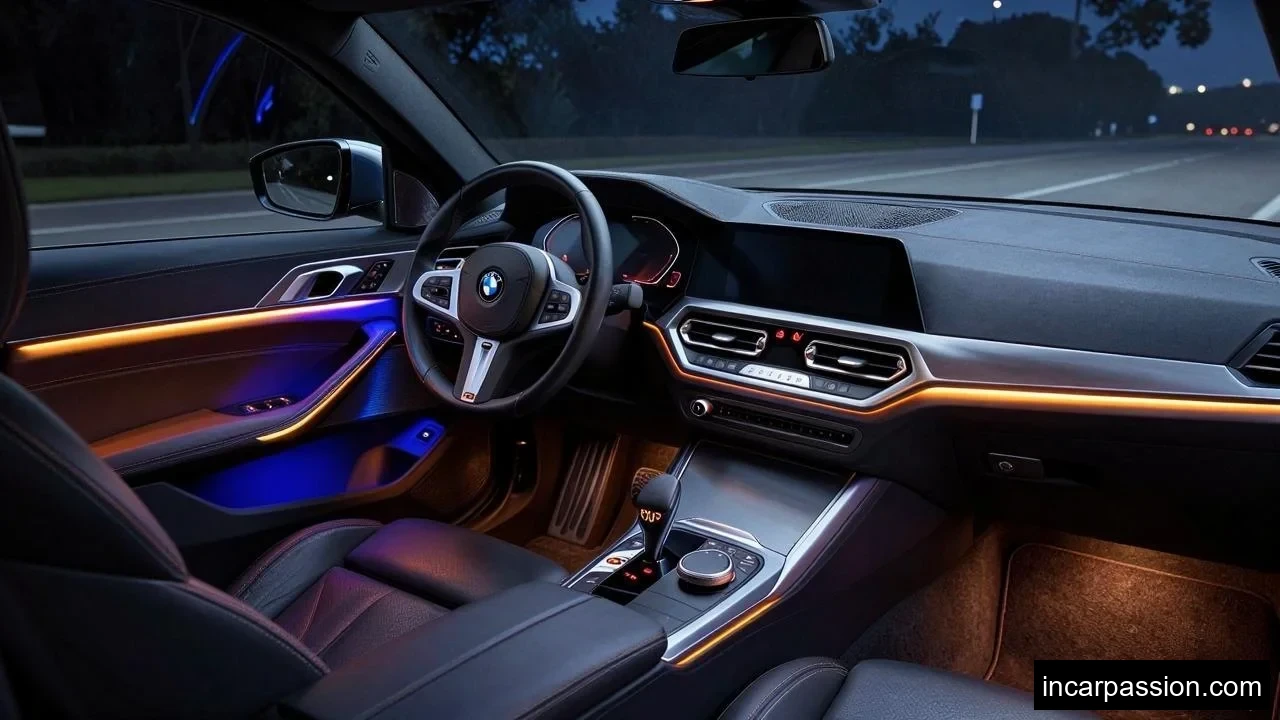
> The Passenger Test: On a BMW 3 Series, the most convincing ambient light upgrade is the one passengers don’t notice at first. They just assume the car came that way from the factory.
—
Our Honest Factory View on Durability
Here’s the part a lot of sellers avoid: both categories can fail, just in different ways.
OEM-Style Kits Usually Fail From:
* Weak clip design (using cheap recycled ABS instead of virgin PC/ABS)
* Poor controller firmware (causing communication drops on the LIN-bus)
* Low-grade harness connectors (non-waterproof or loose pins)
* Over-tight panel tolerances causing stress cracks during temperature swings
LED Strip Kits Usually Fail From:
* Adhesive peel due to thermal degradation
* Wire breakage near sharp door-jamb bends
* Low-cost app controller failure (Bluetooth connectivity drops)
* Water or humidity entering unsealed joints in the footwells
* Color shift from low-grade LED packages running too hot
We generally see better long-term satisfaction when the kit is vehicle-specific, wire routing follows OEM pathways, the controller uses stable constant-voltage output, and the optical design hides the LED source.
For pure longevity, material choice matters. We prefer:
* PC or PMMA for light guides
* PC/ABS for trim structures
* 0.35–0.5 mm copper PCB in powered lighting sections
* Connectors rated for repeated service access (minimum 50 mating cycles)
If you’re browsing [car led strip light](/) options, ask whether the seller can tell you:
* LED density per meter
* Diffuser material
* Operating voltage range
* Controller current rating
* Wire gauge (AWG)
* Warranty term
* Replacement part availability
If they can’t answer, support after purchase may be weak.
—
Buying Checklist Before You Order
Use this checklist before you spend money on any BMW 3 Series interior ambient light kit:
* [ ] Confirm exact chassis and year: F30, G20, and long-wheelbase variants (G28) do not share the same trim geometry. A G20 door panel trim will not fit an F30.
* [ ] Ask what areas are included: Dashboard only? 4 doors? Footwells? Center console? Speaker rings?
* [ ] Check control method: OEM menu (requires coding), app, RF remote, or physical button?
* [ ] Ask about installation method: Replacement trim, clip-in diffuser, or adhesive surface mount?
* [ ] Request night photos and daytime photos: Daytime fitment tells you more than dark glamour shots. Look for gaps around the air vents and door switches.
* [ ] Check warranty: For retail buyers, 12 months minimum is reasonable. Better sellers offer 18–24 months on the controller and harness.
> Pro Tip: If you want the best balance of price and appearance, skip cheap exposed strips and look for a BMW-specific kit with replacement trim or hidden diffuser bars. In our experience, the sweet spot for a 3 Series is usually $350–$650 in parts, where fitment and optical quality improve a lot.
—
FAQ
Is BMW 3 Series factory ambient lighting brighter than aftermarket LED strips?
Not always. Some aftermarket strips are technically brighter, especially high-output RGB strips running at 14.4W/m. However, factory-style systems usually look better because the light is diffused and integrated. For ambient effect, uniformity and glare reduction matter more than raw brightness.
Can I add ambient light to a BMW 3 Series that did not come with it?
Yes. Many aftermarket kits are designed for retrofit. The cleanest option is a vehicle-specific kit with model-matched trim pieces and a dedicated controller. Universal strips also work, but they usually look less OEM.
Will aftermarket LED strips damage my BMW interior?
They can if installed badly. The common risks are:
* Adhesive residue on trim (especially on open-pore wood or leather)
* Broken panel clips during removal
* Scratched soft-touch surfaces
* Electrical issues from poor power tapping (splicing into factory wires instead of using plug-and-play harnesses)
If the kit uses proper connectors, controlled wiring routes, and moderate adhesive, the risk is lower.
Are BMW-specific ambient light kits worth the extra cost?
If you care about appearance, yes—usually. In a premium cabin like the 3 Series, the difference between integrated light guides and stuck-on LED strips is easy to spot. If your budget is under $100, universal strips are the practical option. Above $300, BMW-specific kits become much better value.
How long does installation take on a BMW 3 Series?
For a full dash-plus-door setup, expect 3–6 hours at a professional shop and 4–8 hours for experienced DIY work. A simple universal strip kit can be installed in 45 minutes to 2 hours.
Do aftermarket ambient light kits work with BMW iDrive?
Some do, many don’t. Most universal kits use an app or RF remote. Some BMW-specific kits offer integration that mimics OEM behavior by intercepting CANBUS commands, but this depends on model, controller design, and vehicle electronics. Always confirm compatibility before buying.
—
Final Verdict: Which is Better?
For most enthusiasts shopping for a BMW 3 Series interior ambient light upgrade, the better option is a BMW-specific factory-style ambient light kit.
Why? Because the BMW 3 Series cabin really rewards clean integration. A proper diffuser line across the dash and doors looks expensive, feels right, and stays enjoyable over time. Universal LED strips still have their place—mostly for entry-level budget upgrades or temporary mood lighting—but they rarely deliver the finish level a 3 Series owner expects.
If your budget is:
* Under $100: Buy strips, keep expectations realistic.
* $150–$300: Look for improved diffuser-based kits, but verify fitment carefully.
* $350–$650: This is the practical sweet spot for a true OEM-style upgrade.
* $900+ installed: Only worth it if you want a near-showroom integrated result.
Our advice from the factory floor is simple: buy the light path, not just the LED. That hidden engineering is what makes ambient lighting feel premium.
If you’re comparing solutions now, explore our [vehicle ambient light](/) and [car mood lighting](/) categories to see the difference between universal lighting products and vehicle-focused interior systems. If you already know you want a cleaner OEM-style finish, contact us for fitment guidance and coverage options for your BMW 3 Series. We can help you compare a budget strip setup against a full factory-style package before you spend.
—
References & Sources
* Lighting Research Center (LRC): https://www.lrc.rpi.edu/
* SAE J578 Color Specification Standards: https://www.sae.org/standards/content/j578_202004/
* ISO 16750-4 Road Vehicles Environmental Conditions: https://www.iso.org/standard/61705.html
* ISO 7637-2 Electrical Transient Conduction: https://www.iso.org/standard/50925.html
* ISO 17987 Local Interconnect Network (LIN) Standards: https://www.iso.org/standard/69550.html

 Audi
Audi BMW
BMW Mercedes Benz
 BYD
BYD BAIC MOTOR
 Cadillac
 Chery
Chery Denza
Denza Ford
Ford Geely/ZEEKR
 Honda
Honda Hyundai Kia
 Jaguar
 Jetour
 Jeep
Jeep Lamborghini
 Land Rover
 Lexus
Lexus Li Auto
 Mazda
Mazda Nissan
 Porsche
 Tesla
Tesla Toyota
 Volkswagen
 Volvo
Volvo